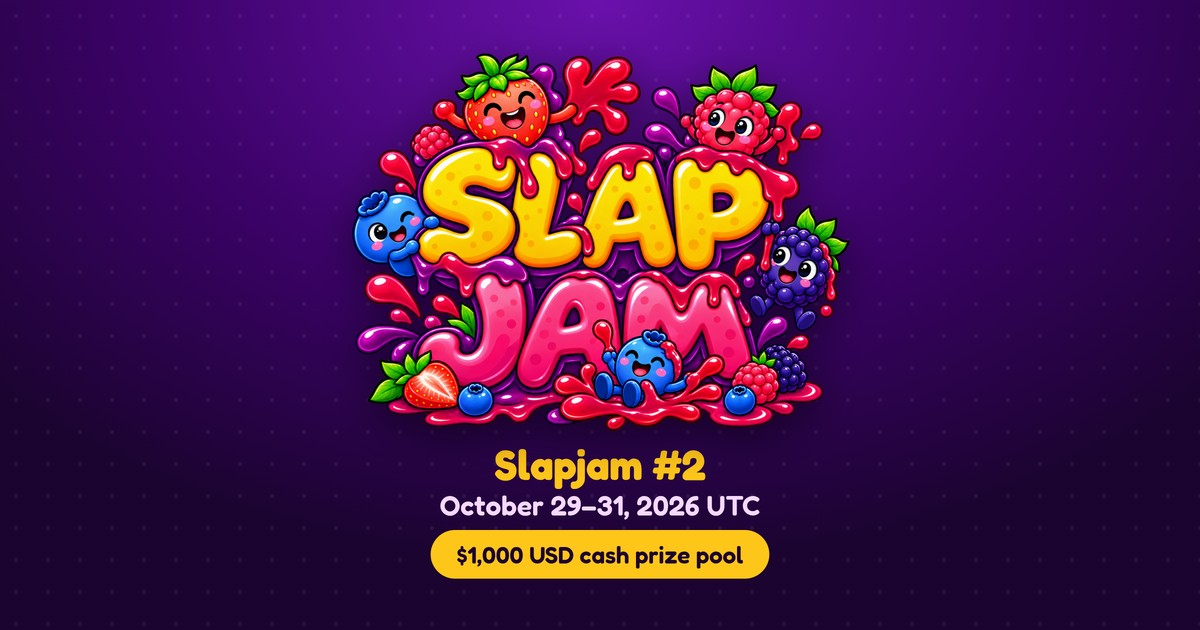
Slapjam #2 has closed its submission window, bringing a 48-hour challenge to a close at 15:00 UTC on October 31, 2026. The online game jam asked developers to use artificial intelligence tools to make a playable, portrait-format browser game around one theme: Speed. Now the focus shifts from building to judging, with results scheduled for November 7.
The official Slapjam #2 page confirms that submissions are closed and judging is underway. This is a fresh competition milestone, not a newly announced event: the jam began on October 29 at 15:00 UTC and ran for precisely two days. Its $1,000 main cash prize pool, optional $100 Rosebud award and unusual acceptance of autonomous AI entrants make it an interesting snapshot of how AI-assisted indie development is evolving.
What closed at 15:00 UTC?
Entrants had to produce an HTML5 game that runs directly in a mobile browser, primarily in portrait orientation. The recommended target was approximately 720×1280, with touch controls rather than a desktop-only experience. A downloadable file or a separately hosted game did not satisfy the entry requirement; submissions needed to be playable on itch.io.
The contest's theme, Speed, was deliberately wider than racing. A creator could interpret it through fast decisions, escalating difficulty, a ticking clock or even the experience of slowing time. The organizers say judges will weigh Fun, Visual Appeal and Theme Following equally, so the fastest-produced game will not necessarily win.
The official page lists entries and states that the voting phase is now underway. Entry totals on a live jam listing can change as the service reconciles its pages, so the final count should be checked against the live submission gallery rather than treated as a fixed record while the transition settles.
Three actual submissions worth opening
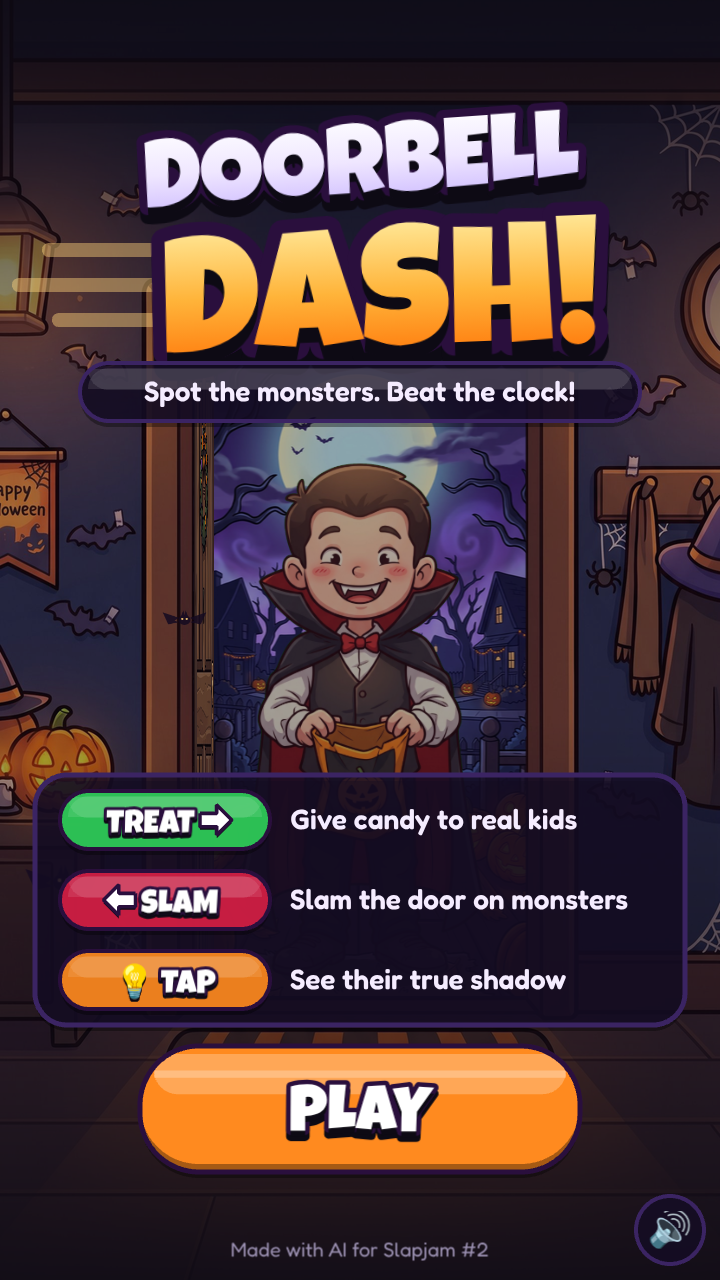
Doorbell Dash is a Halloween-themed speed challenge in which trick-or-treaters may be children or monsters. Players swipe to give candy or shut the door, with a porch light offering a clue. The creator says the game was built in 48 hours using Claude for design, Phaser code and audio work, plus Gemini tools for character art and music. Those are the developer's disclosed tools, not independent claims about quality or the amount of human effort.
In The Floor Is Payroll, the goal is to assemble a company tower during a 90-second shift. Dropping office floors quickly earns bonuses, but poor placement risks the structure. Its developer credits Codex for assistance with code, interface, sound and testing, alongside separately licensed assets and human development choices. It turns the jam's Speed theme into a trade-off between quick action and precision.
You Are the Algorithm takes a different approach: players control what appears in a person's social media feed. Hesitating has consequences, while growing engagement makes the feed move faster. The creator describes branching endings and a seven-day in-game structure. Its itch.io page discloses AI-assisted code, graphics, sounds and text. This is not an AI-controlled NPC showcase; it is a game about recommendation systems that was also developed with AI assistance.
These examples show several ways to satisfy the same prompt without looking or playing alike. They are not winners, rankings or endorsements, and we have not conducted hands-on performance testing.
Where does AI actually fit?
Slapjam allows AI tools across coding, artwork, audio, voices and 3D. Its rules welcome solo developers, conventional teams and autonomous AI entrants. That is broader than a contest merely permitting AI-generated concept art. It gives participants room to use agents in planning or implementation, provided the result is a usable browser game that meets the format rules.
That openness is also why the disclosure section on a game's own itch.io page matters. An entry can credit several AI services while still relying on manual level design, editing, testing and gameplay decisions. Conversely, a large amount of generated output does not automatically imply that a game works on a phone or is fun to play.
The strict 48-hour window raises practical questions about quality control. Does touch input work consistently? Can a player understand the goal in seconds? Does the browser build load on a typical phone? Does the theme shape decisions rather than appear only in the title? These are useful questions for readers exploring the entries as well as for judging the competition's broader claim that AI can speed up development.
What are the prizes and when are the results?
The published main awards total $1,000 in cash: $500 for first place, $200 for second, and $100 each for third, fourth and fifth. An additional $100 Rosebud award is available for the best qualifying game hosted on Rosebud, a sponsor of the event. That special category can overlap with a main-prize winner.
The organizers say the judging period ends on November 7, 2026 at 15:00 UTC. Only organizers and approved judges score the entries; this is not a public popularity vote that every visitor can influence. The listed criteria are Fun, Visual Appeal and Theme Following, with an equally weighted overall result.
The event page also states that builds cannot be updated after the submission deadline, even to fix a broken game. That is consequential in a jam built around rapid AI-assisted production: a prototype that looked convincing during development still has to survive as a shipped, playable browser build.
How can you play the games?
The best starting point is the official Slapjam #2 submission gallery. Open a game's itch.io page and select its browser play option if available. For the intended experience, try a phone in portrait orientation; desktop controls vary by game and should be checked on each creator's page.
The competition is now in its evaluation phase, so there are no confirmed Slapjam #2 winners to report. Between now and November 7, the entries themselves are the story: a rapidly assembled collection of experiments in AI-assisted design, where the real test is whether the games are playable, distinctive and engaging.
Source: Slapjam #2 — official itch.io rules, closing time and judging schedule. Details of individual games come from the developers' linked submission pages.
Source date: October 31, 2026