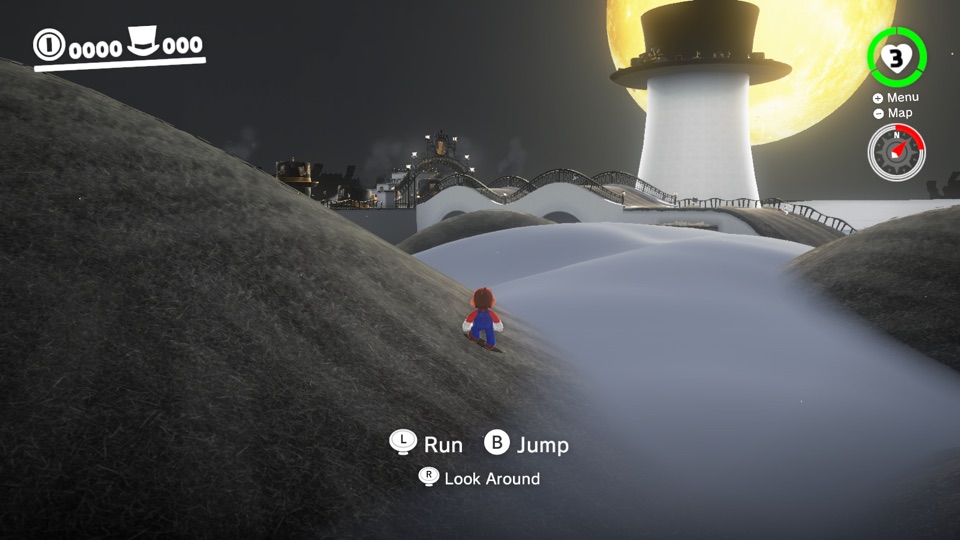
Nintendo Switch games running on an iPhone without a traditional emulator? An open-source project named nxnative, created by developer seedds in October 2026, aims to make that possible by converting user-supplied Switch game files into native applications for recent iPhones, iPads and Apple Silicon Macs.
The developer's GitHub documentation lists Super Mario Odyssey, Mario Kart 8 Deluxe, The Legend of Zelda: Breath of the Wild, Tears of the Kingdom, Metroid Dread and other games. But this is not an official Nintendo release or a universal Switch-to-iPhone solution. The project is experimental, requires technical setup and has limitations that matter as much as its impressive game list. GameLog News has not independently benchmarked the software.
How does nxnative run Nintendo Switch games on iPhone?
Unlike a conventional emulator, nxnative rewrites a game's executable ahead of time so its original code can run on an Apple ARM chip. It also supplies substitute Nintendo Switch system services and translates the console's NVN graphics commands into Apple's Metal graphics technology.
The result is packaged as an IPA application for iOS and iPadOS, or a native app for Apple Silicon Mac computers. Each game becomes its own application instead of being loaded through an all-purpose emulator interface.
nxnative credits technology and ideas from d2r-mobile, a native-execution project originally built for Diablo II: Resurrected. Its toolchain also incorporates or draws upon Ryujinx, Atmosphère, LibHac, SPIRV-Cross and other open-source components.
This approach doesn't make Nintendo's commercial games open source. It also doesn't establish independent compatibility or legal permission to share game files.
Which Switch games are listed as working?
The maintainer publishes a roster of tested titles and individual game notes. Notable entries include:
| Switch game | Developer-documented detail |
|---|---|
| Super Mario Odyssey | Listed with touch controls and supported shake gestures for certain cap moves |
| Mario Kart 8 Deluxe | Listed with missing Mii heads |
| Zelda: Breath of the Wild | 60 FPS indicated with update 1.9.0 |
| Zelda: Tears of the Kingdom | 60 FPS indicated with update 1.4.3 |
| Super Mario Bros. Wonder | Listed with a touch-friendly layout |
| Metroid Dread | Included in the tested roster |
| Super Smash Bros. Ultimate | Offline play only |
These entries represent project-maintainer reports, not independent compatibility certifications. Different software updates may invalidate fixes, and an unlisted game may build successfully yet never start. The README warns that its automatic profile generation is a best-effort attempt for unsupported titles.
Can Zelda really run at 60 FPS?
The main README associates 60 FPS with specific updates: 1.9.0 for Breath of the Wild and 1.4.3 for Tears of the Kingdom. Those claims should not be read as a promise of locked 60 FPS on every compatible iPhone or iPad.
Frame rates can depend on the scene, thermal throttling, memory and shader compilation. The documentation also provides an option to keep certain games at the original 30 FPS, potentially reducing power use.
What iPhone, iPad or Mac is required?
The hardware and operating-system requirements are more restrictive than the phrase "Switch games on iPhone" might suggest.
| Device | Requirements stated by nxnative |
|---|---|
| iPhone | iPhone 15 Pro or newer, A17 Pro-class chip or later, iOS 26+ |
| iPad | M1 chip or later, iPadOS 26+ |
| Mac | Apple Silicon, using the native Mac application build path |
| Build machine | Mac with Xcode and developer tools |
The developer specifically points to BC-compressed textures, which older iPhone graphics hardware cannot read in the format used by the supported games. A more powerful chip is not merely about higher FPS; graphics-feature compatibility matters.
The project is therefore not presented as a tool for every older iPhone, and it isn't distributed through Nintendo or Apple's official game storefronts.
How do you turn a Switch game into an IPA?
The project instructions describe a developer-oriented workflow. The user prepares their own game files and, where applicable, updates and downloadable content. A user-supplied Switch production-key file is also required for the build process.
On a Mac with Xcode and the necessary command-line dependencies, a Python build script converts the game's assets and executable into an unsigned IPA. That package is then installed using a compatible signing or sideloading workflow. Alternatively, the tool can output a Mac app.
The maintainer estimates 30–60 minutes for an initial build, with subsequent builds often faster, and warns that substantial temporary disk space is needed.
No Nintendo game files or console encryption keys are provided in the repository. Owning a game does not automatically settle whether its files can legally be extracted or modified; backup and circumvention rules vary by country. This project should not be confused with a source of authorized commercial Nintendo downloads.
Why can memory limits cause crashes?
The documentation highlights a potentially serious iOS restriction: without an appropriate increased-memory entitlement, a sideloaded app may have around 3.4 GB of memory available. Some larger games can exceed this and be closed by the system.
The project describes configurations that may raise the limit on recent devices, but success depends on the device and signing setup. A generated IPA alone is therefore not proof that a large game can run indefinitely.
What about touch controls and Bluetooth gamepads?
nxnative offers separate on-screen control layouts for 2D and 3D games, with touch gestures for some camera or pointer functions. Connecting a compatible physical gamepad hides the touch-control overlay.
The README also describes phone haptics and motion gestures. In Super Mario Odyssey, for example, shaking the phone can trigger certain motion actions, subject to the project's control-mode requirements.
The known-issues section explicitly states that online features and amiibo are not supported. It also documents intermittent audio after switching away from Fire Emblem Engage and certain visual artifacts in the Super Mario Galaxy games.
Shader compilation may cause brief stutters when a scene appears for the first time. Saves can also require manual backup when reinstalling with a different sideloading tool.
Is nxnative a genuine breakthrough?
From a technical perspective, rewriting console game code into native Apple apps is more ambitious than simply displaying a Switch emulator on a phone. The project documents complex solutions for system services, GPU commands and game-specific behavior, and it credits the open-source work on which those solutions depend.
But significant questions remain about long-term stability, reproducible performance, battery life, compatibility across game versions and the practical complexity of installing these applications. The maintainer's roster is a useful starting point, not a replacement for independent testing.
Bottom line: nxnative offers an intriguing glimpse of Nintendo Switch games running as native apps on powerful Apple devices. For now, the promise of Mario Odyssey and Zelda on iPhone belongs to advanced experimental homebrew, not a supported consumer-ready alternative to owning a Switch.
Confirmed details first, useful context second. This is the quickest path to the source trail and the next pages worth opening.
Source date: October 26, 2026