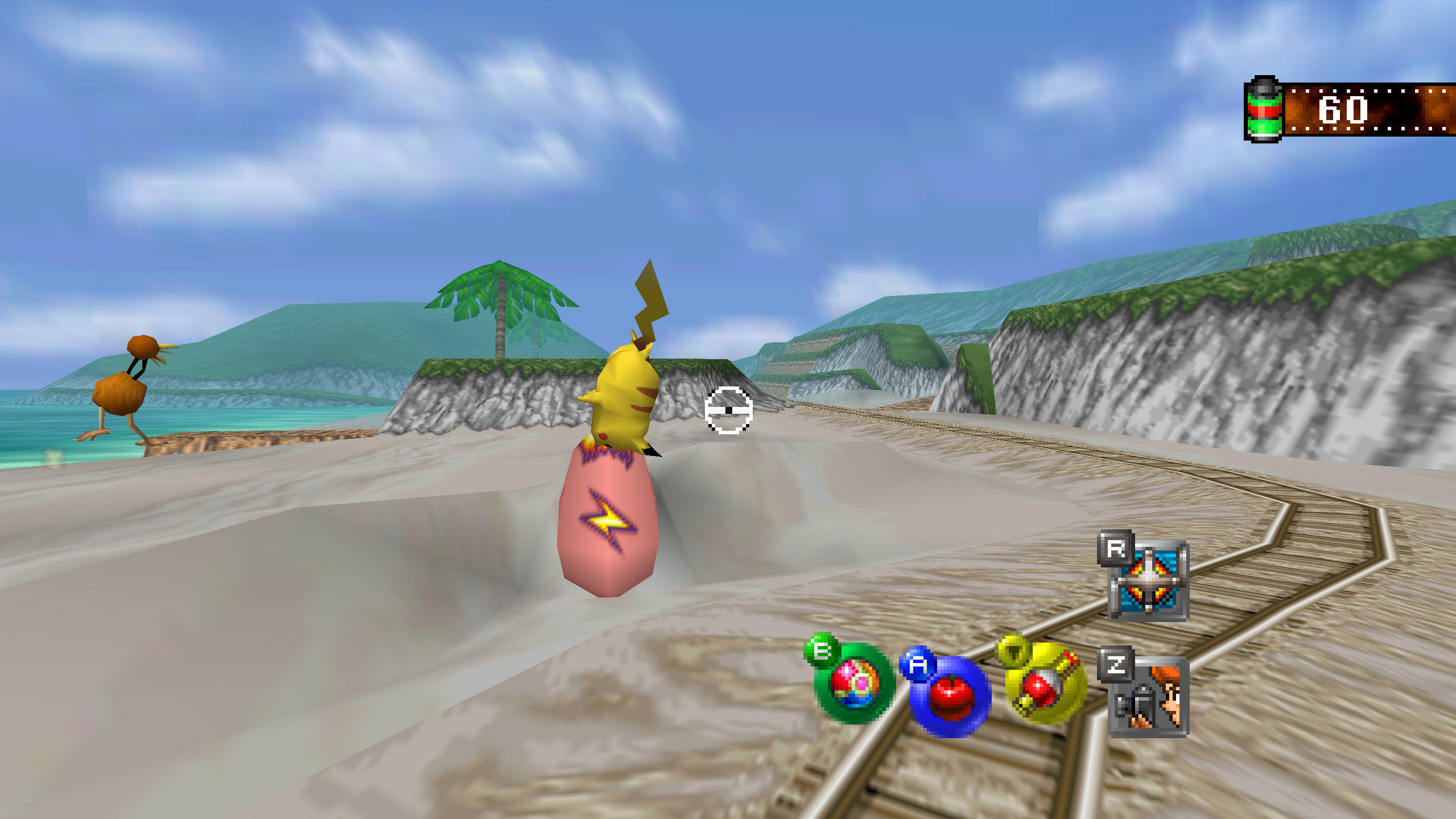
An unexpected reminder that moving classic games to modern hardware takes more than an executable: Snap64 Recomp 1.1.8 targets the specific places where its Pokémon Snap native port can fail before a player even starts taking pictures. The November 16, 2026 release, published at 04:42 UTC, fixes Android GPU crashes, improves graphics-setting recovery and smooths a small but visible title-screen animation detail.
This is a fan-made static recompilation of the original Nintendo 64 Pokémon Snap, not an update to New Pokémon Snap or a Nintendo-supported Android edition. Players still provide their own compatible game data. The developer's official release notes are particularly helpful because they distinguish what was actually tested on real handhelds from what was only exercised in software.
AYN Thor crashes: two separate Vulkan problems
The maintainer says an AYN Thor could close the Android app while it was preparing to render a frame. Two underlying problems emerged during testing. First, the Snapdragon's Adreno driver refused a texture-table resource because its associated pool was sized incorrectly for the number of entries declared. The corrected allocation follows the declared size on Qualcomm hardware and includes a retry path for other drivers.
Solving that first error revealed a second one. A Vulkan query reset occurred inside a render pass, where the graphics API forbids it. Version 1.1.8 moves the reset after the pass has closed. The result, on the reporter's AYN Thor using a test build with both changes, was that Pokémon Snap started and the first course could be played.
The key qualification is test build. The project also ran the published release on Android's emulator, but the notes do not claim an extensive real-world device compatibility study for every chipset. This is meaningful progress for the Thor, not a universal “all Android phones fixed” announcement.
Graphics settings should not trap players in a crash loop
Another bug affected a phone with an Exynos 2400. When high graphics settings exceeded what the device could provide, the app could fail on every launch—even after a reinstall. The project's explanation is that saved settings survive removal of the application, and the old recovery logic only tried lowering supersampling.
Version 1.1.8 now steps down a broader set of settings in order: supersampling, anti-aliasing, color depth and render scale. It avoids requesting unsupported anti-aliasing levels and remembers failed levels for that GPU. The message names what was changed rather than presenting the same unhelpful response repeatedly.
There's another safeguard for crashes that happen before the first frame. After two such failed starts, the next launch can ask whether the user wants to reset potentially problematic picture settings to defaults. The reset requires consent; it is not a silent overwrite of preferences.
In the maintainer's tests, a previous version repeatedly failed under a reproduced settings configuration on Android's emulator, while the new build lowered anti-aliasing and reached the title screen. Importantly, the developer says this specific behavior has not been retested on the original Exynos phone. Players with that device should still treat the change as promising rather than guaranteed.
Better logs when a phone silently closes the game
Android crash diagnosis is difficult when an application simply disappears. Snap64 Recomp now writes information to snap64.log about the signal, active thread, most recent Vulkan call and program addresses involved. On newer Android versions it also picks up the operating system's record of the last process exit at the next launch.
The developer notes that logs on the Thor test builds helped pinpoint the same crash path across the game's own record and Android's report. That can make follow-up bug reports more useful, especially when users cannot run the traditional Windows debugger or see an error dialog.
These changes are aimed at identifying faults, not eliminating the need to report them. If your device still fails, the new log may help the maintainer diagnose the exact step.
Pikachu and the Zero-One get a cleaner exit
A smaller tweak affects the classic title screen. The original game's timing could hide Pikachu or the Zero-One vehicle before they had fully left the frame. With the optional Cutscene Fix enabled, the animation now continues until each is completely offscreen. Players who want the cartridge's original timing can leave the option off; it is off by default.
The distinction between faithful behavior and an optional visual correction fits the project's general approach. Rather than rewriting the whole experience, the port exposes enhancements while keeping the original game's quirks available.
What you can run, and what remains uncertain
The release page lists Windows, Linux, Linux ARM64, macOS and Android downloads, but their maturity differs. Windows has a native package. Linux is described as experimental, with some Steam Deck testing. The ARM64 Linux build has not been tried on real hardware, and the Mac build was run in a virtual environment rather than on physical machines.
On Android, the documented requirements include Android 10 or newer, arm64 and a Vulkan 1.2-capable driver. The developer reports real-player testing on some handhelds for prior builds, plus the Thor test build, but has not exhaustively verified controller support. The original US Nintendo 64 game files are not bundled; a player must supply their own compatible dump.
The most encouraging change in 1.1.8 is not a flashy frame-rate claim. It's a clearer path from “the app closes” to an actionable fix: better memory allocation, more robust Vulkan use, recovery from overly ambitious graphics settings and crash logs for the failures that remain. If you want to experiment with Pokémon Snap on a handheld, the original release notes tell you exactly how far the testing has reached—and where caution is still warranted.
Source date: November 16, 2026