Manor Lords version 0.8.117 has changed farming enough that your old field schedules deserve another look. Promoted to the game's default Steam branch on October 31, 2026, the update introduces animal dung collection, fertilizer, a clearer divide between winter and spring crops, and different harvest and rotation timing.
This is a version-specific evergreen guide, not an announcement supposedly posted within the last hour. Every game mechanic described below comes from Slavic Magic's official Steam announcements. The practical recommendations are interpretations of those documented rules; we haven't performed independent gameplay testing or measured optimal field yields.
How to make fertilizer in Manor Lords 0.8.117
The new fertilizer production chain starts with animals on pastures. Different animals produce dung at different rates. You can assign families as Dung Collectors to gather this resource and take it to a new building called the Dunghill.
The Dunghill stores both raw dung and processed fertilizer. The developer specifies that dung and fertilizer can only be stored there, so normal warehouses and other storage buildings are not substitutes. If the fertilizer supply seems empty, check for pasture animals, collection workers and Dunghill availability before redesigning your fields.
The official notes do not establish a universal number of Dung Collectors or pasture animals required per field. That depends on your settlement. Start with the full production chain, watch the quantities being collected and expand only when your fields need more fertilizer than you can supply.
When do you fertilize fields?
According to the patch notes, Farmhouse workers apply fertilizer to fallow fields during summer. Fertilization increases a field's maximum fertility, and the improvement lasts a little over two years.
That distinction matters. The new mechanic does not instantly guarantee a perfect crop, nor does it eliminate the need to plan fallow seasons. It improves the fertility potential of land that is currently resting.
A sensible plan is to decide which fields can spend time fallow, ensure fertilizer is available before summer and leave enough workers for planting and harvesting elsewhere. Because fertilization is tied to fallow fields, assigning every field to a growing crop all year is not automatically the best use of available land.
Winter crops and spring crops: the new rules
Version 0.8.117 makes the planting calendar more explicit:
- Wheat and rye: primarily winter crops. They can also be sown in spring, but this produces a smaller harvest sooner.
- Flax, barley and oats: spring crops only. They cannot follow a winter planting schedule under the updated rules.
The spring wheat/rye option is therefore a trade-off: faster access to a reduced harvest. It may be useful when timing matters, but the developer has not described it as superior for overall production.
For existing settlements, open the revised field interface and check that each rotation corresponds to the correct season. If a field that used to produce reliably now gives unexpected results, a mismatched planting schedule is worth examining before blaming workers or soil quality.
Crop rotation cannot be disabled anymore
The developer has made crop rotation permanently active. The field interface now provides a 12-month view of upcoming agricultural work.
Rotation can advance after a completed harvest, on September 1 for fields with nothing to collect, or on November 1 if crops have died without being harvested. Those triggers are important because automatic field changes previously risked removing crops before workers could finish collecting them.
There is an additional safety window. Crops left standing into October no longer disappear immediately when the calendar rotates. Instead, they gradually die and lose yield, giving you a chance to salvage part of a late harvest.
This is not a reason to postpone harvesting deliberately. It is a buffer against losing everything at once, while keeping labor planning important. Prioritize fields still holding crops as the growing season ends.
What happens to empty and fallow fields?
A field with a crop selected but no seeds planted now restores fertility as though it were fallow. Farmhouse workers can plow fallow land in spring, summer and autumn, but the notes assign this work the lowest priority.
The update also redistributes when fertility and crops progress. Most fallow regeneration occurs toward the end of a yearly cycle, and much of a crop's growth happens in its final months. Early-season observations therefore may not accurately predict the final outcome.
For this reason, don't treat a slow-looking fallow field as broken immediately. Review the full annual schedule, the field's fertility and whether work has been assigned at the appropriate time.
A practical rotation checklist for your next year
Start with your food and production needs, then separate land intended for winter crops from fields reserved for spring planting. Use a fallow rotation where fertility needs improvement; the new fertilizer mechanic is specifically designed to work with resting land.
Build the livestock-to-Dunghill chain before the summer in which you intend to fertilize. Check that farm workers are available and that the field is actually fallow. Later, watch for October fields with unharvested crops and redirect labor if a harvest is slipping behind.
After modifying a rotation, inspect the 12-month timeline again. The updated interface is intended to show what is planned, reducing the need to guess whether the next crop starts at the right time.
These are planning principles, not a guaranteed highest-yield build. Map fertility, weather, labor capacity and food requirements vary from settlement to settlement.
Other changes worth knowing
Farming isn't the only new feature. Update 0.8.117 adds the Fishmonger artisan, who turns fish and salt into smoked fish. Six new development perks in the Rural Foundations category unlock at settlement level three, expanding mid-game settlement choices.
The release also contains balance, interface and AI changes. If you have been playing an experimental beta, review the official developer changelog rather than assuming every feature first appeared on the day the patch reached the default branch.
The short version: pasture animals supply dung; Dung Collectors deliver it to the Dunghill; Farmhouse workers fertilize fallow fields in summer. Schedule wheat and rye primarily in winter, flax/barley/oats in spring, and use the compulsory rotation timeline to prevent missed planting and late-harvest problems.
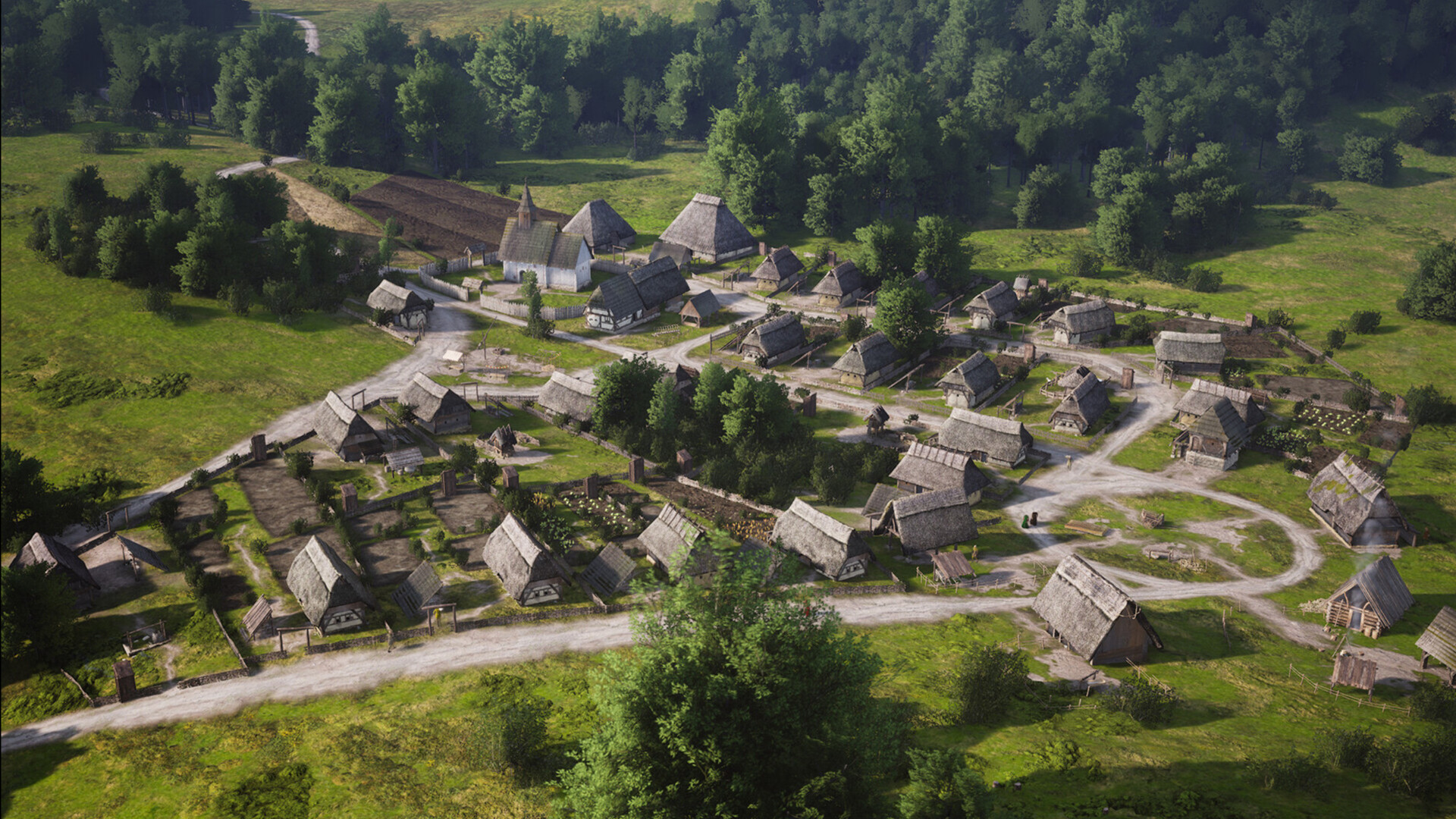
Image credit: Genuine Manor Lords gameplay screenshot displayed on the official Hooded Horse game page and hosted in the publisher's Steam media files. Hooded Horse links a press kit offering downloadable screenshots and artwork for editorial coverage. This is a real game image, not a screenshot claimed to show the new 0.8.117 interface. © Slavic Magic / Hooded Horse.
Source date: October 31, 2026