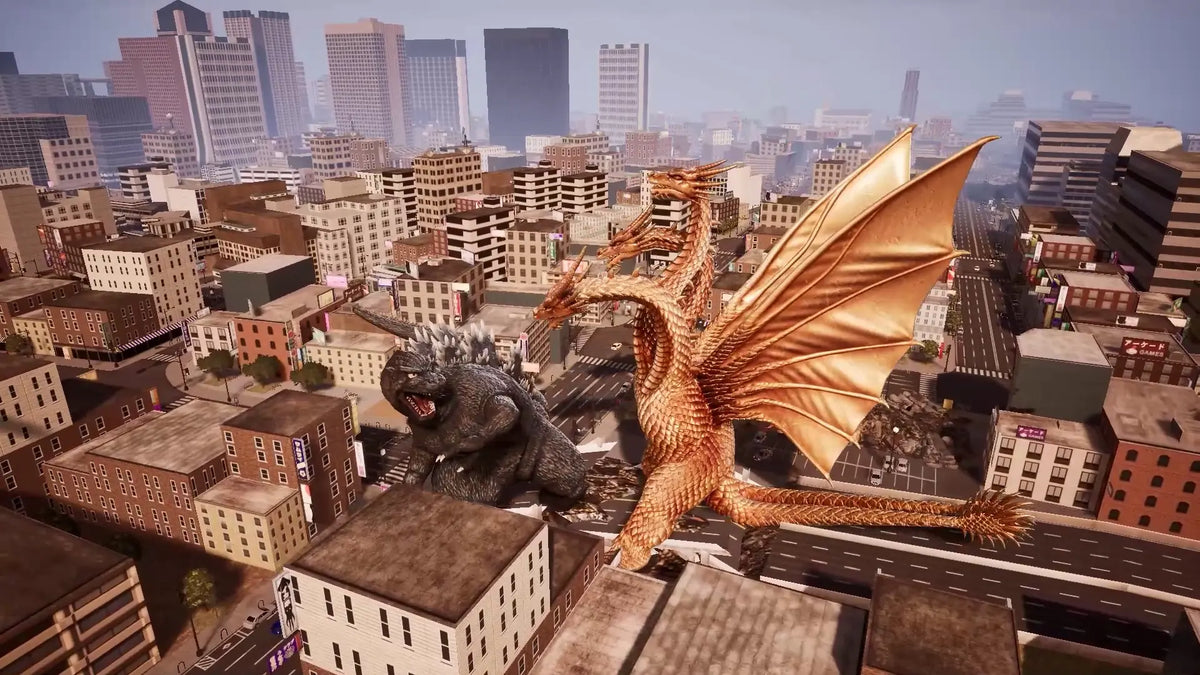
Godzilla: Destroy All Monsters Melee Remastered arrives on November 3, 2026 in the United States, bringing Atari and Pipeworks' 2002 arena fighter to Nintendo Switch 2, PlayStation 5, Xbox Series X|S and PC. The Switch 2 listing confirms four-player local matches, two-player online play and an estimated 3.9 GB download. Its US release date differs from Nintendo Australia's November 2 release roundup, which lists November 4 for that market.
If you are returning for couch battles or considering the game for the first time, this guide covers the platforms, regional release-date discrepancy, pricing, multiplayer options and changes to the original. The details below come from Nintendo's November 2 release guide, Nintendo's US store listing, and Atari's published materials. No hands-on performance testing is implied.
When does Godzilla Remastered release?
The Nintendo US eShop lists November 3, 2026 for Godzilla: Destroy All Monsters Melee Remastered on Switch 2. Atari's official game page also advertises November 3, while Steam lists the same date for PC.
There is an important regional wrinkle: Nintendo Australia's November 2 article lists November 4 for Switch 2. That difference may reflect local storefront scheduling or time zones, but neither page provides enough information to establish an exact global unlock hour. Use your own region's Nintendo eShop listing before planning a launch-night session.
Is the original Nintendo Switch getting the game?
Do not assume Switch 2 and the original Switch have the same launch availability. The live Nintendo product page reviewed for this guide is specifically a Nintendo Switch 2 product. Atari's June launch press release did name Nintendo Switch among the intended platforms, but Atari subsequently told Nintendo Everything in an October 30 interview that current distribution decisions had led to a Switch 2 release and that a future original-Switch release was only possible, not confirmed.
For buyers with a Switch 1, the sensible conclusion is to wait for a platform-specific listing rather than buying based on the old announcement.
What does it cost, and where can you play?
Atari's original announcement specified a $29.99 US digital price and a $39.99 physical Switch 2 edition, with the physical version described as a complete cartridge. These were announced US prices; regional storefront totals, taxes, and availability may differ. Confirm the live price on your platform before purchasing.
| Platform | What is confirmed |
|---|---|
| Nintendo Switch 2 | Listed by Nintendo; US launch November 3 |
| PC / Steam | Steam store lists November 3 and full controller support |
| PlayStation 5 | Announced by Atari; platform store lists November 3 |
| Xbox Series X | S |
| Original Nintendo Switch | No confirmed simultaneous launch in Atari's October interview |
Nintendo's Switch 2 listing estimates the download at 3.9 GB and supports TV, tabletop and handheld play. This is a storefront estimate, not a guaranteed final install size. The game does not appear in the US listing as a Switch 1 purchase.
Four players locally, but two online
This is the detail most likely to matter when deciding whether to buy. Nintendo lists one to four players on a single Switch 2 and two players online. The four-player couch-brawler experience therefore does not automatically translate to four-player internet matches.
Pipeworks has emphasized how important local play is. In the October 30 interview, the developer said that Switch 2's individual Joy-Con controls were designed to make the game practical for groups without requiring every person to own a full controller. Nintendo also lists Nintendo Switch Online as required for its online play features; that membership is sold separately.
The public listings do not establish cross-platform multiplayer between PC, PlayStation, Xbox and Switch 2. Treat cross-play as unconfirmed, rather than assuming every online opponent can join the same lobby.
What is different from the 2002 original?
Atari and original developer Pipeworks have retained the large-scale monster brawling while updating presentation and progression. Official listings describe 12 playable kaiju and eight arenas, including cities, Monster Island and an alien mothership. Arenas have day and night variants; destructible objects and buildings still matter to combat.
The announcement describes a visual rebuild in Unreal Engine 5 and a focus on preserving the combat feel. In the October interview, Pipeworks explained that new character models were adapted to original skeletons while environment improvements concentrated on materials and textures. That is useful context for anyone expecting a completely redesigned modern fighting game: the goal was to retain the identity of the older brawler, not replace it.
Progression, practice and camera tools
The remaster also changes the way content opens up. Pipeworks described research points earned through matches, projects that unlock monsters and arenas, and optional rumor objectives that give players extra goals. The developer specifically said the point-based system is not a microtransaction system.
Two other additions stand out: a Practice mode for experimenting with individual characters and a Director Mode that lets players pause and position a free camera for screenshots. The developer also mentioned character leveling within single-player modes. Do not interpret that as a permanent competitive advantage in online matches.
Is there a demo or an official trailer?
Atari announced a Steam demo for October 15 and published an official roster trailer showing its monsters and combat. Check the game's Steam page for current demo availability rather than assuming it remains downloadable on every platform. The trailer embedded near the beginning of this guide is Atari's earlier official roster reveal, not newly captured November launch footage.
The original appeal remains unusually straightforward: choose a monster, learn its moves, knock down landmarks and challenge friends. What matters at launch is whether the new network play and remastered presentation hold up in real sessions. The publisher's feature list cannot replace independent testing.
Should Switch 2 owners buy it at launch?
If four-player local monster fights are what you want, Switch 2 has the advertised ingredients: the four-player mode, individual Joy-Con support and the returning arena-driven combat. If your priority is playing online with three distant friends, however, the confirmed Switch 2 online player count is two, not four. And original Switch owners should not mistake the Switch 2 listing for a confirmed cross-generation release.
The safest buying checklist is simple: check your region's release date, verify the local price, confirm whether you will play locally or online, and wait for post-launch assessments if frame rate and netcode quality are deal-breakers.
Source date: November 2, 2026