Hyrule is already appearing on Windows PCs, less than a day into the Nintendo Switch 2 remake of The Legend of Zelda: Ocarina of Time. But don't mistake that for a flawless PC version. The experimental Lichii emulator can get the game through its opening sequence and into gameplay. Depending on the build and graphics hardware, players are still running into white fog, missing scenery, fully black 3D scenes and erratic frame rates.
The latest public evidence is unusually concrete: a Lichii build-75 release published on November 5 at 02:37 UTC, followed by emulator bug reports and a shader fix merged later the same day. Nintendo, meanwhile, released the remake officially for Switch 2 on November 5. There is no announced native Windows version.
For emulation fans, the remarkable part isn't a screenshot of Link running somewhere other than Nintendo hardware. It's the speed at which developers have moved from a failed launch to visible, if badly broken, gameplay—and how much work remains between those milestones.
What Lichii build 75 actually achieved
The build-75 changelog calls its newest compatibility work 'the green-hat kid adventure,' an unmistakable reference to the new Zelda. Earlier builds could abort roughly 20 seconds after launch because of an unsupported 64-bit wait-on-address operation. The latest release ports an upstream fix and translates approximately 80 shader programs that previously failed.
Those changes make a real difference. Testers have reported successfully passing the opening video and reaching game scenes. One November 5 report specifically notes that build 75 works past the intro on Windows in docked mode, where other builds got stuck before a usable scene appeared.
But the release notes also document 12–22 FPS on a Ryzen 9 5900X with an RTX 3080 in one test. That is a developer-reported result on a particular machine, not a recommended minimum specification or a universal benchmark.
The same release warns that outdoor scenes have far too much fog and glow compared with console output. In other words, the emulator's progress is genuine, yet the picture may be so overexposed that it obscures Link and the world around him.
Reaching gameplay is not the same as being playable
Several users have encountered an even stranger failure: the 3D image vanishes completely while the game continues to respond. A detailed Lichii issue from a Windows 11 laptop with an RTX 4060 describes visible hearts and button prompts over a black gameplay screen. Menus and item previews still render.
That is why screenshots of a working menu or a single attractive cutscene cannot establish full-game compatibility. They prove that particular part of the program rendered on a particular configuration. They do not prove that an entire dungeon, battle or play session works correctly.
The results are also hardware-dependent. Reports from AMD GPUs and other configurations show similar black scenes, while one mobile-PC report documents shader compilation and memory pressure on an Adreno 740.
Some online demonstrations have displayed a 60 FPS counter at selected moments, while other coverage describes 15–30 FPS gameplay and heavy stutter. Those claims are not necessarily contradictory: a menu, cutscene, short corridor and busy outdoor scene can have very different loads. None of these isolated numbers establishes a stable, end-to-end 60 FPS experience.
The November 5 shader fix is a more interesting breakthrough
The day-one progress did not stop at build 75. Lichii contributors opened and merged pull request #112 on November 5 to fix texture-gather instructions used by the remake's higher-resolution reconstruction path.
The technical explanation matters. At certain resolutions, the game switches to a reconstruction process whose compute shaders were being rejected by the emulator. When those dispatches failed, the final image could be black even with the game's HUD visible. A powerful GPU alone could not fix missing shader translation.
The pull request adds support for depth-compare gathers and half-precision per-tap gathers, plus related control-flow handling. Its contributor reports that a Windows test at 1920×1080 internal resolution no longer logged rejected native compute shaders, and that the image appeared instead of remaining black.
That is a meaningful development result, not a guarantee every player can reproduce it. The change was merged into the source; availability in a specific packaged build must be checked separately. The contributor also reported unresolved lighting differences and artifacts.
Another November 5 developer debugging thread documents overexposure, missing vegetation and faulty overlays in particular scenes. Even users who can get past the title screen may face those issues.
Does that mean a native PC port exists too?
No. Emulation and native recompilation are different things. Lichii attempts to execute Switch-family software through compatibility and hardware emulation layers. A native port would instead rebuild or translate the game into a program designed to run directly on PC hardware.
There are community claims and early experiments around a native approach, but demonstrations of an opening cinematic—or a crash after the intro—are not evidence of a finished Windows port. The story confirmed here is Lichii's experimental emulation progress, not a legitimate new PC edition from Nintendo.
Nintendo's official version remains the Switch 2 release, with reworked visuals, voiced cutscenes, orchestral music and modernized movement and camera controls.
What do the current tests prove?
| Stage | What the evidence shows |
|---|---|
| Boots the game | Yes, on some Lichii builds and systems |
| Plays opening content | Reported by testers on compatible configurations |
| Reaches gameplay | Yes, in documented tests, with serious caveats |
| Renders graphics correctly | No, substantial visual bugs remain |
| Stable 60 FPS throughout | Not established |
| Official PC edition | No, Nintendo lists Switch 2 only |
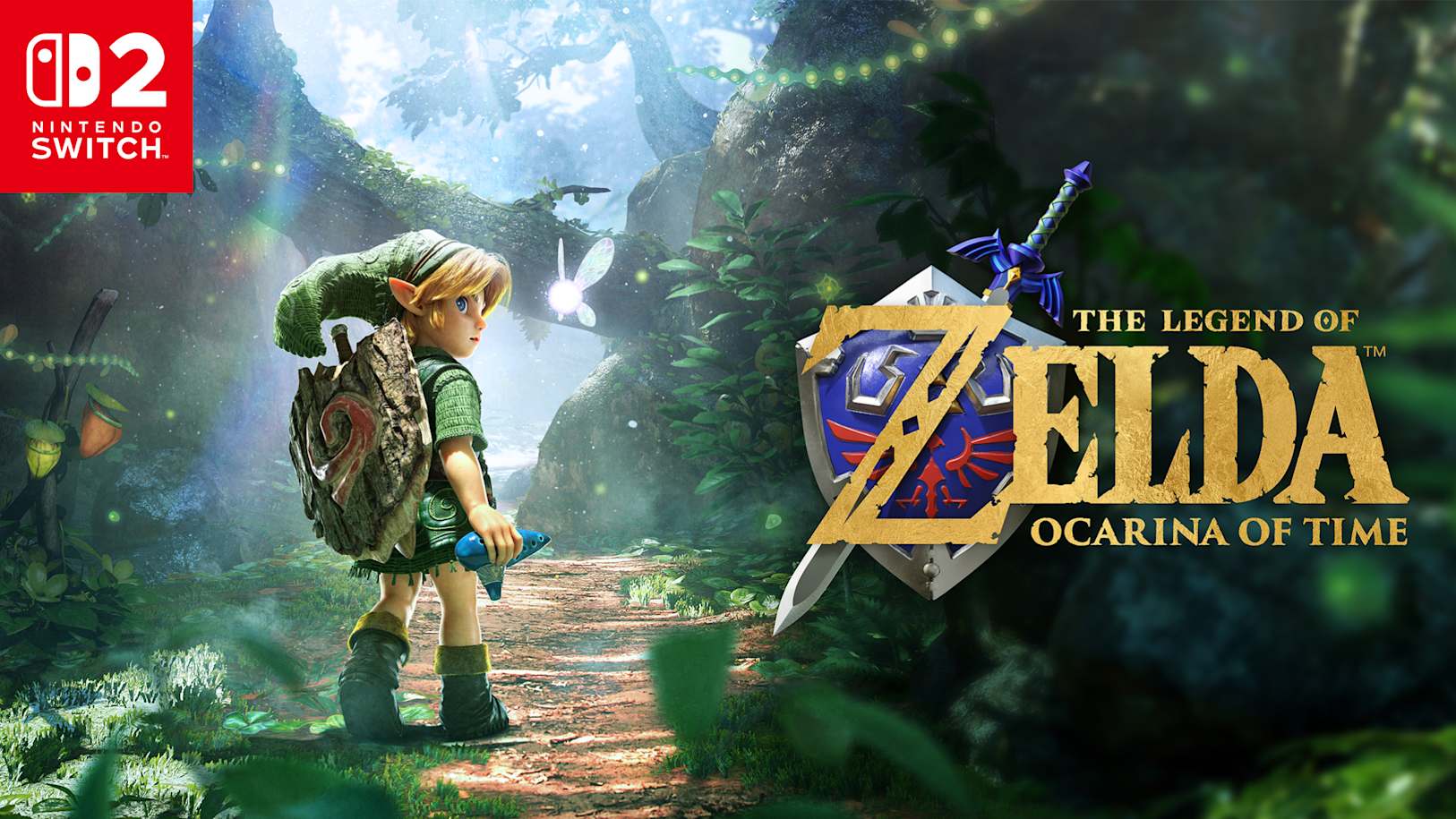
The emulator is an experimental community project, and GameLogNews has not independently tested the remake on PC. This article draws on the project's release notes, merged code changes and hardware-specific user reports. An official Nintendo image accompanying this report shows the Switch 2 game itself, not a verified emulator capture.
What happens next for Zelda on PC?
The short-term questions are less glamorous than a headline FPS counter. Can Lichii consistently display the 3D scene? Can it fix the heavy fog and missing foliage? Can shader translation avoid long stalls and crashes across different GPU vendors?
Those questions are being investigated publicly, and later development builds may improve particular scenes before others. It would be premature to call the experience fully playable or recommend it as a replacement for the Switch 2 release.
This is also not a guide to acquiring game dumps, console keys or copyrighted files. Ownership and local laws matter; the linked project information is for understanding the development work.
Still, there is a genuinely exciting technical story here. On the day Ocarina of Time returned to Nintendo hardware, emulator developers were already turning a failed boot into real gameplay, then tracking down the specific graphics instructions that kept Hyrule invisible.
Day-one emulation is impressive. Day-one compatibility is another challenge entirely.
Source date: November 5, 2026