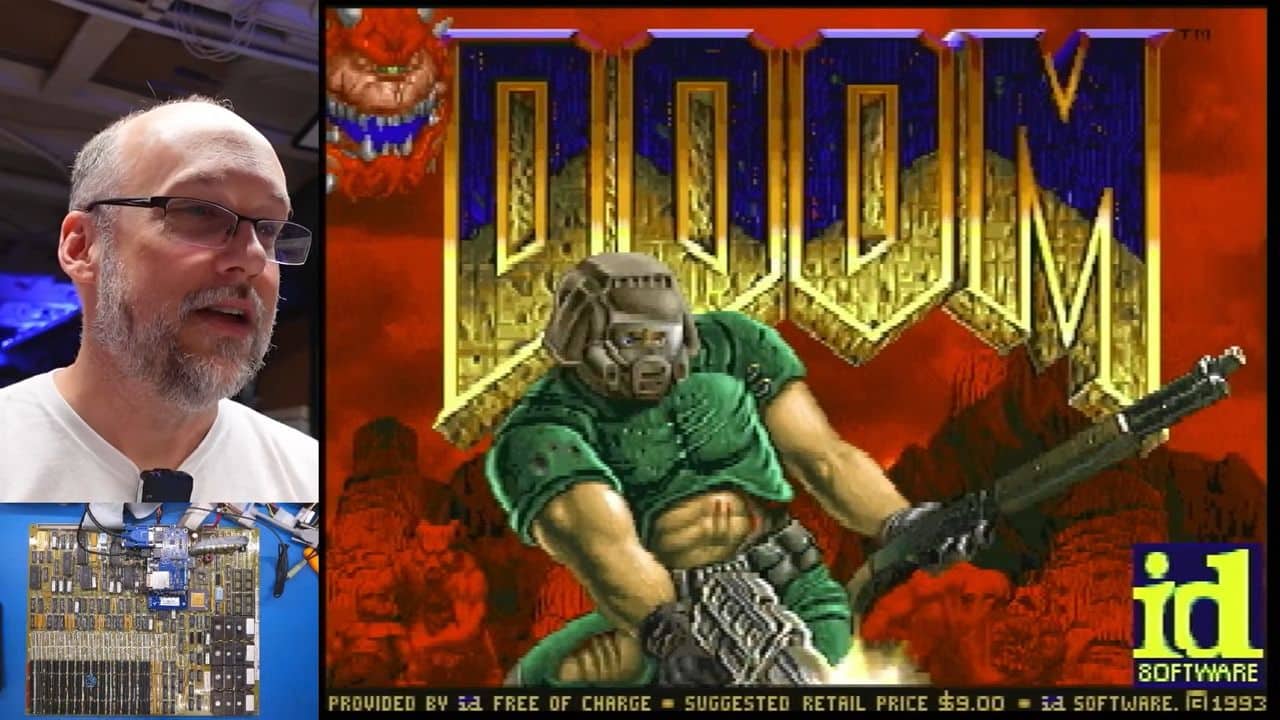
The Feat: Doom on Ancient Printer Hardware
The boundaries of what constitutes viable gaming hardware were dramatically pushed forward by a recent demonstration from a tech enthusiast. Using an ancient Agfa Compugraphic 9000PS printer controller—a piece of industrial machinery dating back approximately four decades—the creator successfully got the classic first-person shooter, Doom, running. This achievement, reported by Tom's Hardware on April 12, 2026, is not merely a novelty; it represents a profound technical undertaking that required deep knowledge of vintage computing architecture and modern game emulation. The core of the story lies in the sheer disparity between the intended function of the hardware and the demanding requirements of the software. The Agfa unit was designed for high-volume printing and data processing, not for rendering complex 3D environments or handling the rapid input/output cycles demanded by a title like Doom. The process, as detailed in the source material, involved far more than simply connecting cables. It necessitated the addition of entirely new firmware, alongside the integration of modern display and audio output capabilities to make the experience playable for a contemporary audience. This level of modification transforms a specialized, decades-old peripheral into a functional, albeit highly unconventional, gaming platform. The successful execution of this project highlights the incredible resilience and underlying computational power latent within industrial hardware that was previously considered obsolete.
Analyzing the Technical Hurdles and Architecture
The technical complexity of running Doom on the Agfa Compugraphic 9000PS is the most compelling aspect of this story. The hardware's foundation, featuring a Motorola 68020 processor, places it within a specific lineage of computing power that predates many modern consumer devices. While the 68020 was a powerful chip in its time, its original operating environment was entirely divorced from the graphical and audio demands of a 1993-era game like Doom. The challenge, therefore, was not just running the game, but making the entire system *speak* the language of modern gaming. The source material confirms that the initial hurdle was the firmware itself. Firmware is the low-level software embedded directly into the hardware, dictating how the machine operates. Modifying this firmware to handle graphical rendering pipelines, audio streams, and input polling for a game engine like Doom required an expert level of reverse engineering and hardware interfacing. This process is a masterclass in digital archaeology. It forces the practitioner to understand not only the game's requirements but also the precise operational limits and architectural quirks of the 40-year-old machine. The successful integration of display and audio output further complicates the picture, as these components typically require dedicated, modern interfaces that the original printer controller was never designed to support. This level of bespoke engineering elevates the project from a simple retro gaming demo into a significant piece of hardware hacking and digital preservation.
The implications of this technical feat extend far beyond the single game demonstrated. It suggests that many pieces of industrial and specialized computing equipment retain far more latent potential than their original manufacturers or users ever anticipated. The ability to coax a modern, graphically intensive title onto a machine built for text and print output proves that the underlying computational architecture, when properly understood and modified, can be far more flexible than its original purpose suggests. The core components that made this possible included:
- The Motorola 68020: Providing the foundational processing power.
- Firmware Modification: Overcoming the original operational constraints to support new functions.
- I/O Integration: Successfully adding modern display and audio outputs to the vintage board.
What This Means for Retro Computing
For the retro gaming and computing communities, this demonstration serves as a powerful reminder of the sheer depth and breadth of historical computing technology. It shifts the conversation away from simply emulating old systems and toward the concept of *repurposing* them. The traditional approach to retro gaming often involves using dedicated emulators or restoring original, purpose-built consoles. The Agfa project introduces a third, more radical category: the repurposed industrial machine. This approach suggests that the future of retro computing may involve a deeper dive into specialized, non-gaming hardware that can be adapted for entertainment purposes. This opens up entirely new avenues for hardware hacking and creative technological expression.
The primary takeaway for players and enthusiasts is the validation of the "do anything" ethos of deep tech tinkering. It proves that the limits of gaming hardware are often defined by our imagination and our willingness to modify existing systems, rather than by the physical limitations of the components themselves. While the immediate player impact is limited to the novelty of running Doom on a printer, the long-term impact is educational. It encourages a new generation of hobbyists to view old, specialized electronics not as junk, but as complex, adaptable computational canvases. The success of this project sets a high bar for what is technically possible when dedication, deep engineering knowledge, and a passion for obsolete technology intersect.
The most important unresolved signal from this demonstration is the potential for commercialization of this methodology. If the techniques used to modify the Agfa unit can be generalized—if the process of adding modern I/O and firmware to specialized industrial controllers can be streamlined—it could revolutionize how niche, powerful, but non-gaming hardware is utilized. This moves the conversation from "Can we make it work?" to "How widely can we apply this methodology?" The enthusiasm surrounding this feat confirms that the appetite for extreme, technically challenging retro experiences remains robust, pushing the boundaries of what we consider "gaming hardware" itself.
Confirmed details first, useful context second. This is the quickest path to the source trail and the next pages worth opening.
Source date: April 12, 2026