RPCS3 Emulator Breakthrough Enhances PS3 Game Performance Across CPUs
The intricate dance of PlayStation 3 emulation has taken a significant leap forward, courtesy of the dedicated developers behind the open-source RPCS3 project. Their latest advancements focus on a deeper understanding and more efficient emulation of the PS3's notoriously complex Cell Broadband Engine processor. This isn't just about playing old games; it's about pushing the boundaries of what's possible with legacy hardware emulation on modern PC architectures, offering a glimpse into the future of retro gaming performance.

Why this matters: For PC builders and enthusiasts who value performance-per-dollar and the preservation of gaming history, these optimizations translate directly into a smoother, more accessible retro gaming experience. The ability to harness the power of contemporary CPUs to accurately replicate the Cell's unique parallel processing capabilities is a testament to the ingenuity of the emulation community. Lead developer Elad has been instrumental in this progress, identifying novel SPU (Synergistic Processing Unit) usage patterns and meticulously crafting new code paths designed to enhance native PC output efficiency. This granular approach to optimization ensures that the benefits trickle down across a wide spectrum of hardware, not just bleeding-edge components.
Twisted Metal Performance Boost on Modern PCs
We have achieved a new breakthrough on emulating PS3's Cell CPU!
— RPCS3 (@rpcs3) April 3, 2026
Elad discovered new SPU usage patterns and coded ways to generate more optimised PC code from them - benefitting all games!
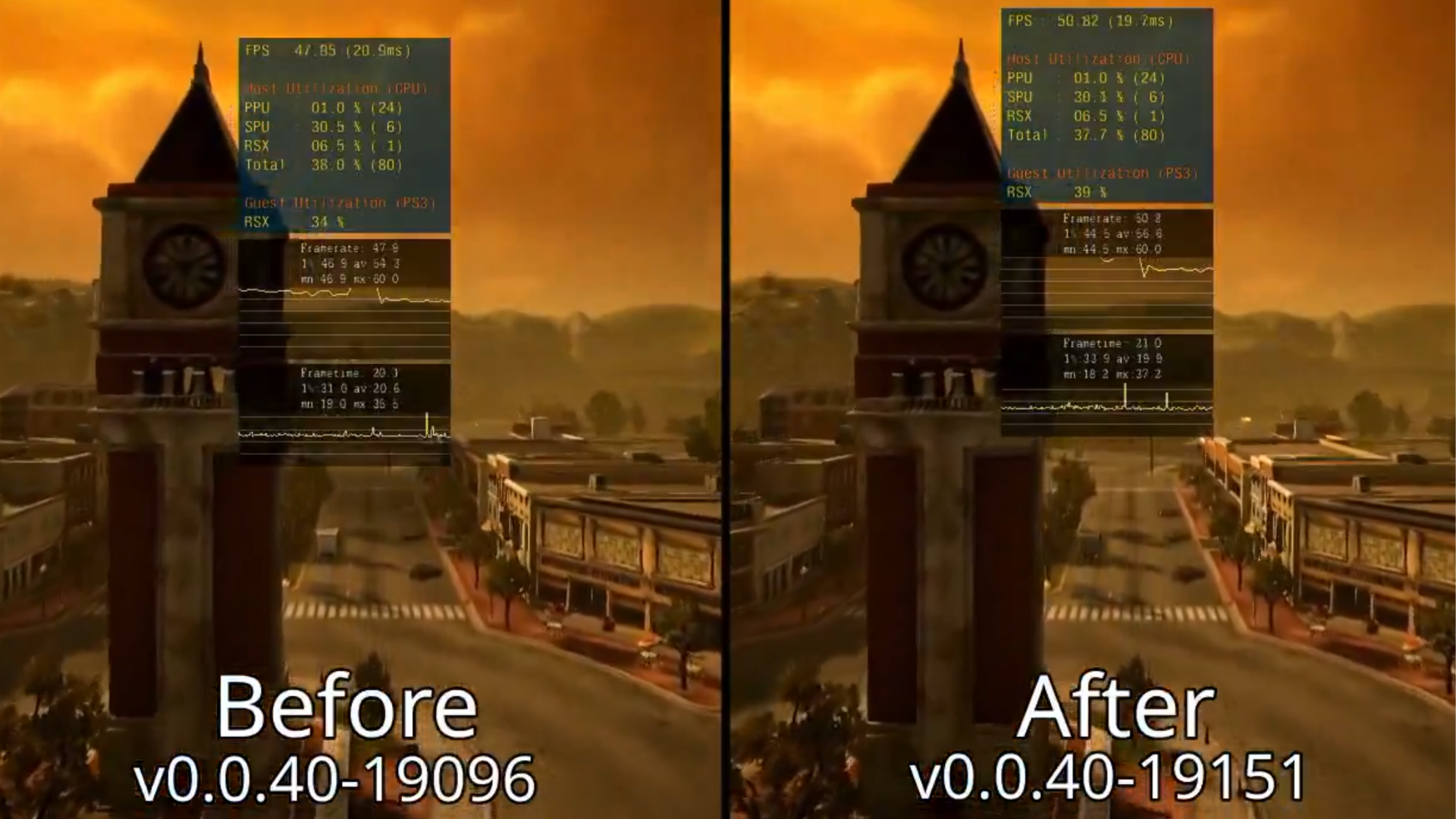
Twisted Metal, one of the most SPU-intensive games, sees a 5-7% Average FPS improvement. pic.twitter.com/x29X4C5JnV
A prime example of the tangible gains achieved is the performance improvement seen in the vehicular combat classic, Twisted Metal. Between emulator builds v0.0.40-19096 and v0.0.40-19151, this title experienced an average frames-per-second (FPS) uplift ranging from 5% to 7%. This may sound modest on paper, but in the context of emulation, such gains are substantial. They signify a reduction in CPU overhead, a common bottleneck when emulating complex architectures. This optimization is not an isolated incident; it’s designed to benefit all CPUs, from entry-level processors that might struggle with demanding emulation tasks to high-end enthusiast chips that can now dedicate more resources to game logic and rendering rather than the emulation process itself.
Broad Performance Benefits Across Titles
The impact of RPCS3's ongoing development extends beyond a single game. Audio rendering and overall performance in Gran Turismo 5, a title known for its demanding technical requirements, have seen marked improvements, even on more modest hardware like a dual-core AMD Athlon 3000G. This demonstrates the emulator's growing ability to leverage even less powerful systems, democratizing access to high-fidelity PS3 emulation. Furthermore, RPCS3 has integrated new Arm64 SDOT and UDOT instruction optimizations. These are crucial for accelerating SPU emulation specifically on Arm hardware, a platform that is increasingly relevant in the PC enthusiast space. This forward-thinking approach ensures RPCS3 remains at the cutting edge, ready to adapt to evolving CPU architectures and provide a superior emulation experience.
The architecture of the Cell processor, with its unique combination of a PowerPC-based PPE (Power Processing Element) and multiple SPEs (Synergistic Processing Elements), presented a formidable challenge for emulation. Early attempts often struggled to effectively parallelize tasks across these units, leading to performance disparities and graphical glitches. The recent breakthroughs in RPCS3 are a direct result of reverse-engineering these SPU workloads and developing highly efficient translation layers. By understanding how games utilized the SPEs for specific tasks like physics, AI, and audio processing, developers can now map these operations more directly onto modern CPU cores. This allows for a much more direct translation of the PS3's intended computational flow, minimizing the overhead associated with simulation. The nanometer process of the original PS3's Cell chip (45nm) is a far cry from today's sub-7nm fabrication, but the raw processing power it offered, especially in parallel tasks, is what RPCS3 is striving to replicate. The TFLOPS figure for the Cell, while impressive for its time, doesn't tell the whole story; it's the *architecture* that made it unique and difficult to emulate. The current optimizations focus on maximizing the efficiency of this architectural translation, aiming for higher effective TFLOPS utilization on the host PC. Thermal efficiency is also a consideration; a more efficient emulation process means less strain on the host CPU, leading to lower temperatures and potentially quieter operation of gaming PCs.
The value-per-dollar proposition for PC builders looking to engage with PS3 classics has never been stronger. Instead of investing in aging and often unreliable original hardware, a capable modern PC can now offer a superior and more stable experience. The ongoing development of RPCS3 means that performance will continue to improve, making more PS3 titles playable at higher resolutions and frame rates. This evolution is critical for game preservation, ensuring that these influential titles remain accessible for generations to come. The focus on instruction-level optimizations, like the Arm64 advancements, highlights the project's commitment to supporting a diverse range of hardware, from desktop behemoths to more compact, power-efficient systems.
Frequently Asked Questions
What are the new Arm64 optimizations in RPCS3?
RPCS3 has introduced new Arm64 SDOT and UDOT instruction optimizations. These are designed to significantly speed up the emulation of the PS3's SPU on Arm-based hardware.
How much did Twisted Metal performance improve with the latest RPCS3 builds?
Between builds v0.0.40-19096 and v0.0.40-19151, Twisted Metal saw an average FPS improvement of 5% to 7%. This optimization benefits all CPUs by reducing emulation overhead.
Can I play PS3 games on a low-end PC with RPCS3?
Recent RPCS3 optimizations have improved performance even on less powerful hardware, such as a dual-core AMD Athlon 3000G for titles like Gran Turismo 5. However, performance will vary significantly based on the specific game and your PC's specifications.
Tags : #RPCS3Emulator #PS3Games #CPUPerformance #GamingNews #TechBreakthrough
Confirmed details first, useful context second. This is the quickest path to the source trail and the next pages worth opening.
Source date: April 6, 2026