Are the geopolitical battlegrounds of Washington and Beijing set to dictate the future of your high-performance gaming rig? The rhetoric around AI hardware has escalated dramatically, moving far beyond simple market competition. When the CEO of Nvidia made an 'atomic bomb' analogy, the entire global tech community paused, realizing the stakes are not just about processing power, but about the very architecture of the next computing era.
What this means for enthusiasts and builders is that the global supply chain for high-end components is entering a period of intense regulatory uncertainty. Why this matters: the escalating debate over Nvidia chips export controls could fundamentally change component availability and cost structures for years to come.
Huang Defends Nvidia's Role in Global AI Infrastructure

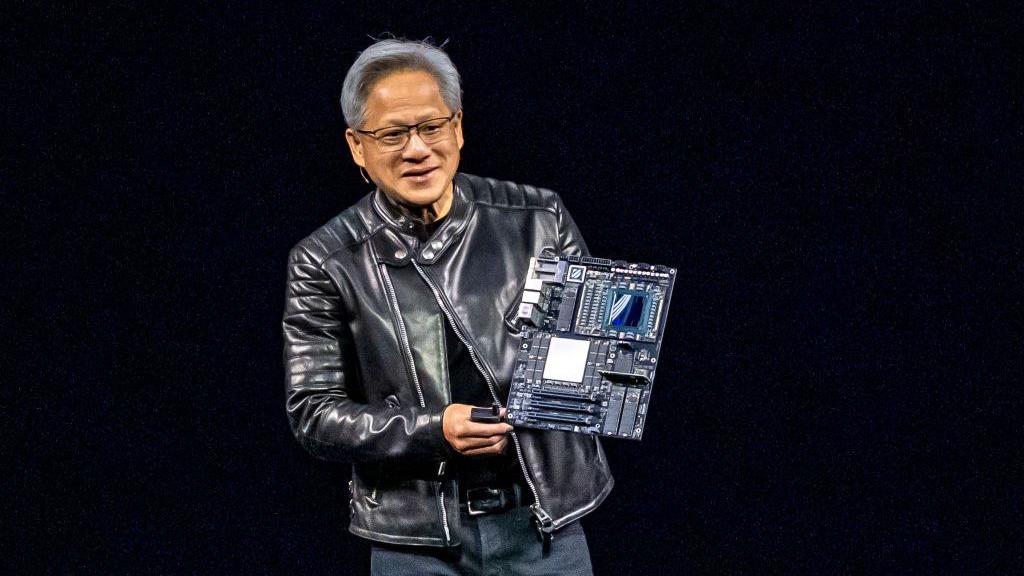
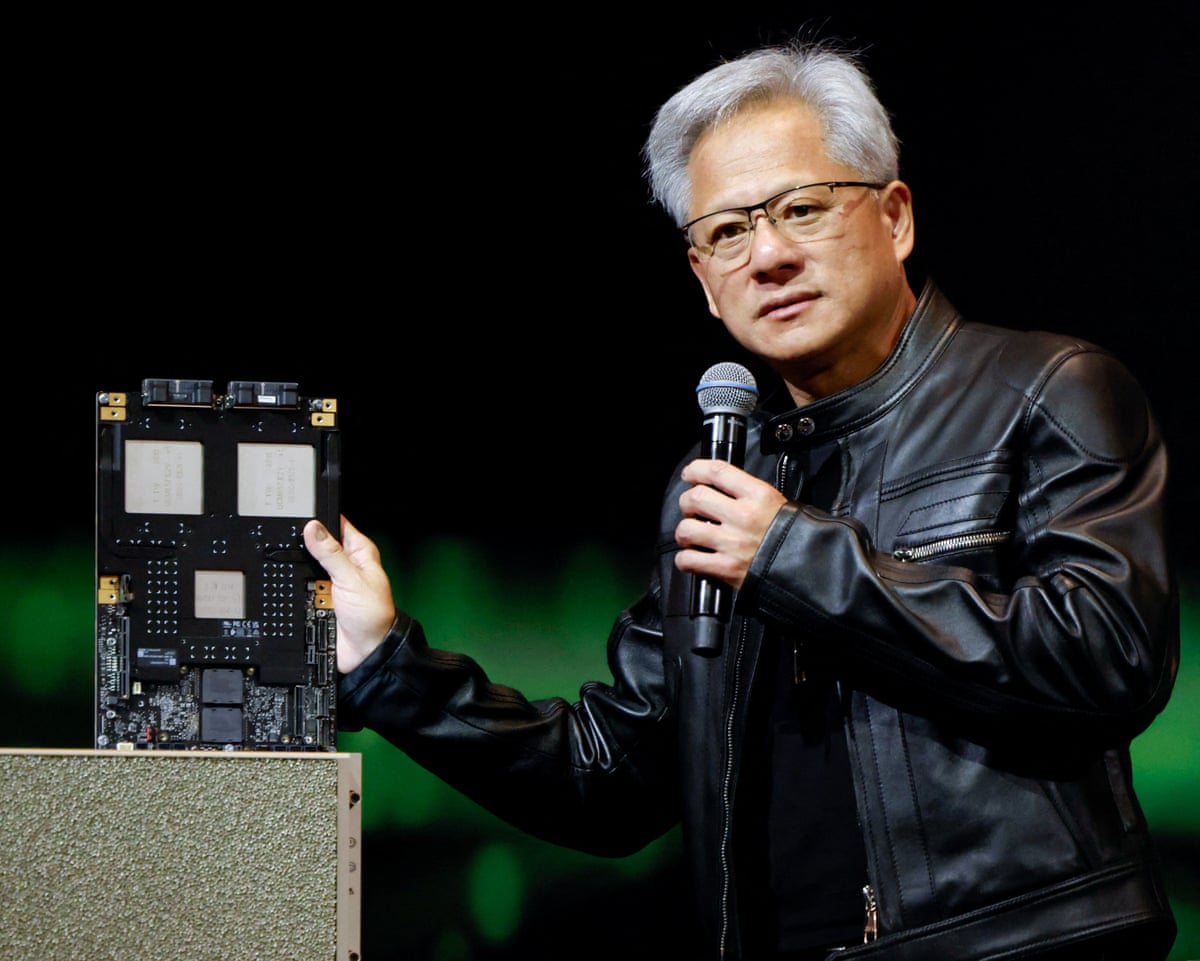
During a recent public address, Nvidia CEO Jensen Huang strongly rejected the comparison of his specialized GPUs to "atomic bombs," calling the analogy "stupid" and "ridiculous." Huang's defense was not merely defensive; it was a calculated assertion of market dominance and technological necessity. He shifted the focus from the emotional weight of the analogy to the sheer utility and ubiquity of the hardware itself.
His argument highlighted that the reach of American technology is vast, noting that "a billion people" rely on Nvidia GPUs. This wasn't just a sales pitch; it was an economic statement, arguing that most global AI research and infrastructure currently runs on American hardware. The implication is clear: the current tech stack, built around Nvidia's architecture, is foundational to modern digital life.
Huang further argued that attempts to block access to the American tech stack would severely undermine the U.S. advantage in AI technology. He predicted that any attempt by China to isolate itself technologically would result in the Chinese military and academic sector bypassing U.S. AI technology, mirroring historical geopolitical actions. This narrative attempts to frame the export controls not as a limitation, but as a destabilizing force that only solidifies the U.S. technological leadership.
Navigating Controversy Over Export Controls
The core tension remains the export controls themselves. Critics argue that while the regulations are intended to limit access, they could inadvertently create pathways that benefit adversaries. The debate centers on the classification of these advanced chips—are they purely for consumer gaming, or are they inherently part of a dual-use technology framework?
This brings us to the complex issue of AI chips dual-use technology. When a component, like a high-end GPU, can power a massive language model (AI) and also power a gaming rig, its control is inherently difficult. The rules designed to restrict advanced compute power inevitably bleed into areas that are technically difficult to monitor, creating loopholes that intelligence agencies are actively pursuing.
Despite the stated restrictions, the picture of compliance is muddy. Public documents have surfaced showing instances where Chinese universities linked to the military-industrial complex acquired Super Micro servers equipped with Nvidia A100 AI GPUs. While Nvidia has denied providing technical assistance to DeepSeek to enhance its training efficiency for models used by the People’s Liberation Army (PLA), the mere existence of these reports fuels the global speculation around China AI chip tensions.
The Technical Fallout for Builders and Developers

For the PC builder and the AI developer, the takeaway is a mix of opportunity and risk. The primary constraint imposed by Nvidia chips export controls means that the cutting edge of performance, measured in TFLOPS and architectural efficiency, is increasingly dictated by international policy rather than pure market demand.
This forces the industry to look deeper into value-per-dollar. Instead of simply chasing the highest-end card, builders must now weigh performance against availability and potential regulatory hurdles. We are seeing increased focus on maximizing compute efficiency within the available architecture, whether that means optimizing CUDA usage, tweaking memory bandwidth, or building robust cooling solutions to maintain peak performance over long training cycles.
The market reaction suggests a bifurcation: one side chasing the absolute bleeding edge, and the other optimizing for reliable, high-efficiency performance using more regulated or domestically sourced components. The sheer architectural complexity of modern AI chips—which rely on massive parallel processing—means that even small changes in the supply chain can ripple through the entire ecosystem, affecting everything from latency to sustained compute power.
Looking ahead, expect continued regulatory scrutiny that will force hardware manufacturers to diversify their chip strategies. This could accelerate the adoption of non-Nvidia architectures in certain enterprise sectors, while simultaneously cementing Nvidia's dominance in the consumer and top-tier AI development space, provided the U.S. maintain its technological lead. The global AI race will increasingly become a race for compliant, highly optimized compute modules, forcing builders to become geopolitical analysts as much as hardware enthusiasts.
We anticipate that the next phase of these controls will move from outright bans to hyper-specific, performance-based throttling, limiting TFLOPS output rather than simply blocking access entirely. Furthermore, the focus will shift toward making AI chip certifications mandatory, requiring deeper integration of hardware provenance checks. Finally, expect more visible efforts in developing alternative, non-American-sourced high-performance compute clusters to mitigate geopolitical risk.
Frequently Asked Questions
How do export controls affect gaming hardware pricing?
Pricing can become volatile. Restrictions on advanced chips often limit supply, which can inflate costs for comparable high-performance components, especially in enterprise-grade systems.
Are there alternative GPUs for AI development?
Yes, while Nvidia dominates, other architectures like AMD's Instinct series and various specialized ASICs offer powerful, though often less mature, alternatives for specific AI workloads.
What does 'dual-use technology' mean in this context?
It refers to hardware or software that has legitimate civilian applications (like gaming or consumer AI) but can also be adapted for military or surveillance purposes, making it difficult to regulate.
Confirmed details first, useful context second. This is the quickest path to the source trail and the next pages worth opening.
Source date: May 17, 2026