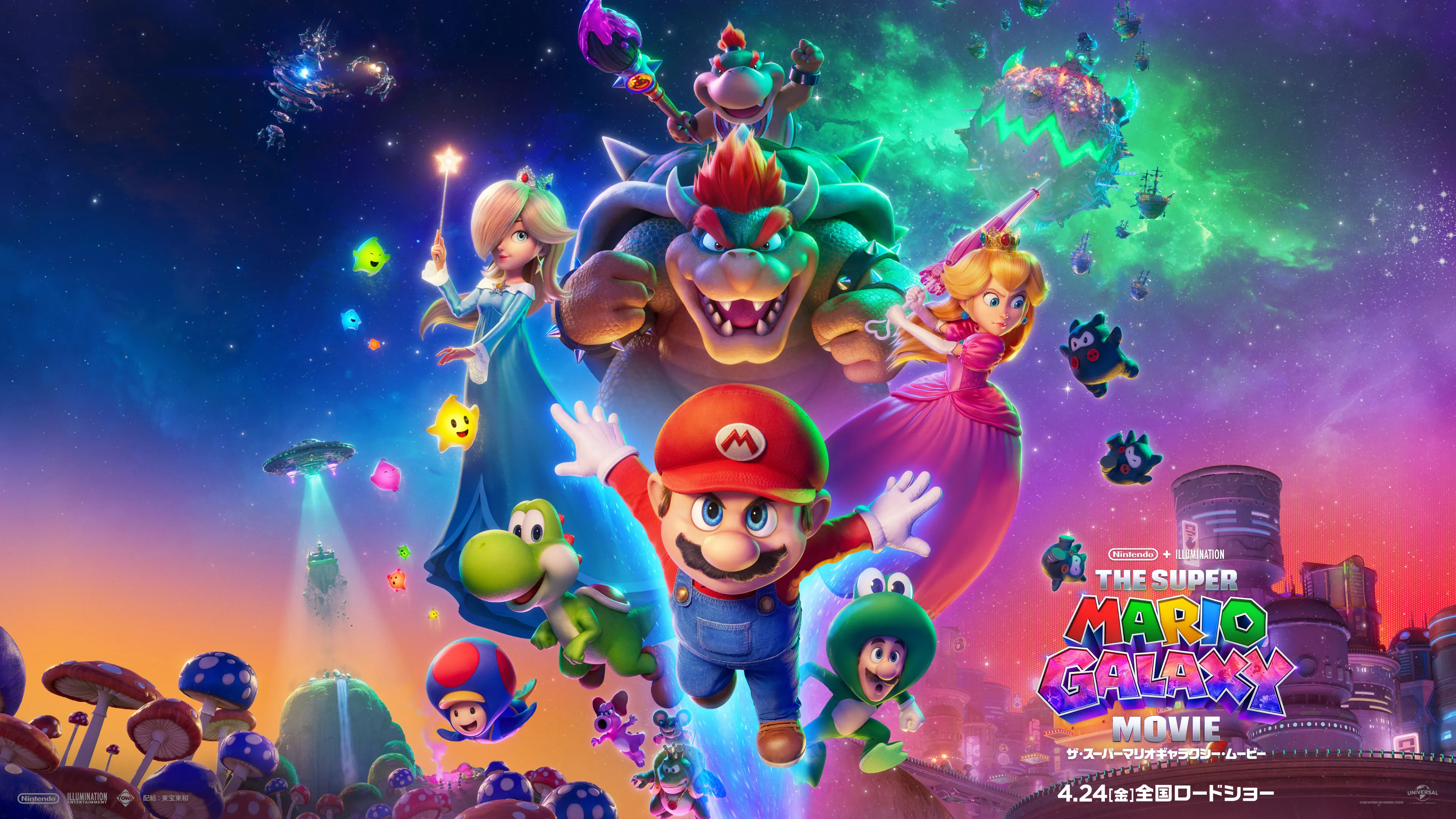
Editorial correction — November 11, 2026: This April 1 report formerly treated Shigeru Miyamoto's remarks as a definitive rejection of a Nintendo cinematic universe. The original interview was more nuanced: he did not expect every Nintendo character to join one film, but left room for carefully chosen appearances. The publication date and URL are unchanged.
Did Miyamoto reject a Super Smash Bros. movie?
In a March 31, 2026 interview with Polygon, Nintendo's Shigeru Miyamoto discussed the crossover characters in The Super Mario Galaxy Movie. He did not unveil a Super Smash Bros. movie, but he also did not announce a permanent ban on such a project. His point was that Nintendo and Illumination were not setting out to assemble every Nintendo character into one shared film.
That distinction changes the story. It is more accurate to describe Miyamoto as cautious about all-star crossovers than to report a definitive studio cancellation of an unannounced project. An interview about how one animated film was created cannot be read as a timetable for all future Nintendo adaptations.
Read the original Polygon interview for the underlying comments.
Why non-Mario characters appear in the Galaxy movie
The film's space setting creates room for surprises beyond the conventional Mushroom Kingdom cast. Miyamoto described his long-standing willingness to let Pikmin appear in other Nintendo properties. He and Illumination producer Chris Meledandri discussed how cameo ideas emerged from individual creative choices.
Meledandri's explanation emphasized ideas that made particular scenes entertaining, rather than a chart plotting a decade of interconnected films. In other words, a cameo might be a playful surprise with no promise of a sequel, spin-off or franchise-wide crossover.
What Nintendo actually announced
Nintendo and Illumination jointly produced The Super Mario Galaxy Movie, a follow-up to 2023's The Super Mario Bros. Movie. Nintendo's March 10 press release confirmed a theatrical launch beginning April 1, 2026, and promoted its final trailer.
That release also named Donald Glover as Yoshi, Issa Rae as Honey Queen and Luis Guzmán as Wart, joining the already announced voice cast. The film was distributed worldwide by Universal Pictures, with a later April premiere in Japan.
These are attributable facts from Nintendo's March 10 corporate announcement. The same announcement does not announce a Super Smash Bros. film or a wider cinematic crossover roadmap.
Does a cameo equal a shared universe?
No. A guest character can serve as a visual joke, an Easter egg or a supporting appearance within another series. A deliberately shared universe requires an ongoing continuity or production plan that connects different titles. The former does not prove the latter.
Nintendo's Super Smash Bros. games bring together characters from many franchises. That makes fans understandably interested in a film counterpart, particularly when familiar characters appear in Mario's animated universe. But fans' interpretations should be clearly labeled as speculation unless Nintendo, Illumination or Universal publicly confirms a film.
What about The Legend of Zelda and other series?
The Polygon conversation did not announce or cancel future films for The Legend of Zelda, Metroid or any other Nintendo property. Discussing a cameo strategy for one Mario production cannot establish a blanket restriction on other filmmakers or studios.
For readers tracking Nintendo movies, the practical rule is simple: treat a named production, its release date and its cast as confirmed only when supported by an announcement. Treat broader franchise connections as possibilities until backed by a primary source.
Miyamoto's approach to Pikmin
Pikmin are unusually easy to place in a background because of their small size and whimsical designs. Miyamoto's enthusiasm for cross-franchise Pikmin appearances was a specific exception in the interview. It did not amount to confirmation of a standalone Pikmin film or a new game launch.
The filmmakers' example illustrates the difference between character recognition and narrative integration. A Pikmin cameo can entertain viewers without requiring that Pikmin's fictional world become part of a unified timeline covering every Nintendo game.
How Illumination makes these decisions
Chris Meledandri described conversations about which characters would be fun within the movie's scenes, with Miyamoto's judgment as part of the process. This offers an explanation for selective cameos without implying that every creative choice was designed to advertise another adaptation.
There is no contradiction in enjoying crossovers and declining to promise an Avengers-style assembly. The two ideas operate at different scales and should not be conflated in reporting.
What's confirmed as of November 11, 2026?
The film's April release, its Nintendo–Illumination partnership and the remarks published by Polygon are verifiable. Those remarks show reluctance toward indiscriminate crossover storytelling, not an official permanent veto. The reporting cited here contains no confirmed Super Smash Bros. movie date.
A future official announcement could change the picture; the historical April article must not suggest a decision was already made.
Sources
- Polygon's original March 31, 2026 Miyamoto and Meledandri interview.
- Nintendo Life's contemporaneous quotation and summary.
- Nintendo and Illumination's March 10 official film announcement.
- Official Nintendo/Universal movie imagery.
This correction separates statements actually made by the filmmakers from fan speculation while preserving the archived article's original URL and date.