For years, PC enthusiasts have watched memory technology evolve in predictable, often incremental, steps. DDR5 felt like a significant leap, but what if the next true revolution isn't about faster clocks or tighter timings, but entirely new dimensions? A recent announcement threatens to upend everything we thought we knew about RAM.
What this means for players: If NEO Semiconductor's bold claims hold true, your next gaming rig could leverage memory far denser, more efficient, and better suited for AI than anything currently on the market, potentially reshaping how games are developed and performed.
NEO Semiconductor's Memory Breakthrough
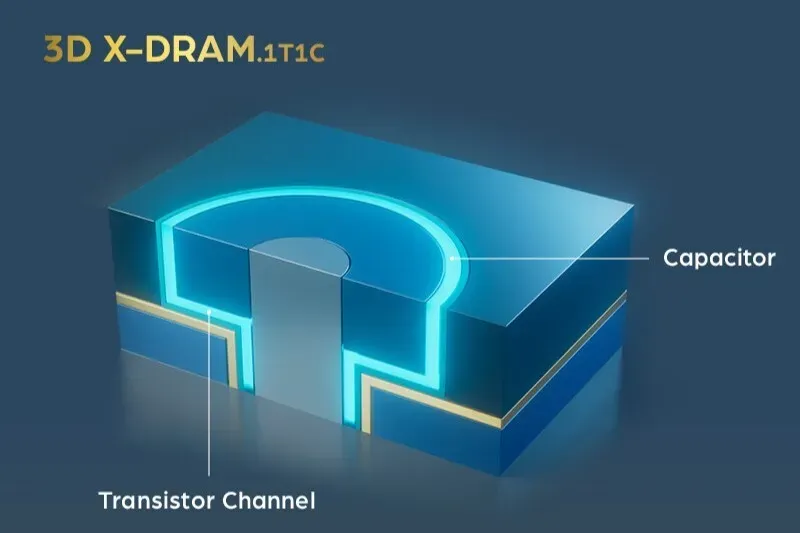
On April 23rd, NEO Semiconductor made waves by announcing successful proof-of-concept (POC) validation for its groundbreaking 3D X-DRAM technology. This isn't just another iteration; it's a fundamental shift in memory scaling. Instead of pushing existing planar limits, NEO has gone vertical, stacking memory cells in a way that conventional DRAM architectures simply can't replicate.
This vertically stacked design promises a trifecta of benefits crucial for modern computing: significantly higher density, dramatically lower power consumption, and improved suitability for the burgeoning demands of AI-driven workloads. For PC builders, this translates directly into potential for more RAM in smaller footprints, less heat, and ultimately, more raw performance for complex tasks and high-fidelity gaming.
The successful POC chips weren't just theoretical; they were fabricated and rigorously tested at NIAR-TSRI, in close collaboration with NYCU. This hands-on validation adds significant weight to NEO Semiconductor's claims, moving 3D X-DRAM from concept to tangible reality.
Industry Validation for 3D X-DRAM
When a technology promises such a paradigm shift, industry skepticism is natural. However, NEO Semiconductor’s announcement arrived with powerful endorsements. A new strategic investment, notably led by Stan Shih, the venerable founder of Acer and a director at TSMC, signals serious confidence from key players. This isn't just a venture capital punt; it's a strategic backing from someone deeply entrenched in the hardware ecosystem.
Further cementing its legitimacy, industry experts are taking notice. Jeongdong Choe of TechInsights, a respected voice in semiconductor analysis, publicly lauded the results as a "significant milestone." He specifically pointed to the shift toward 3D memory architectures as an inevitable future, and NEO Semiconductor’s progress with 3D X-DRAM as a leading indicator.
A major advantage cited by analysts is NEO Semiconductor's utilization of established 3D NAND processes. This isn't building from scratch; it’s leveraging existing manufacturing expertise, which is a key indicator of the technology's promising future and potential for faster market adoption and competitive pricing. This approach could significantly reduce the hurdles typically associated with entirely new fabrication methods, offering a better value-per-dollar proposition sooner than expected.
The Evolving Competitive Landscape

While NEO Semiconductor has certainly captured attention with its 3D X-DRAM, they are not alone in the race to redefine memory. The competitive landscape is heating up, with parallel progress from other innovators. SAIMEMORY, for instance, is making strides with its ZAM architecture, another contender in the emerging 3D memory space.
SAIMEMORY’s efforts are backed by an equally impressive roster of heavyweights, including SoftBank, Intel, and substantial support from the Japanese government. This indicates a broader industry consensus that traditional memory scaling is indeed reaching its limits, and 3D solutions are the path forward. The question for PC builders and enthusiasts isn't if 3D memory will arrive, but which architecture will deliver the best performance, thermal efficiency, and ultimately, the best build experience.
The race between these companies highlights the intense push for next-generation memory. While direct comparisons of TFLOPS or nanometer efficiency aren't fully available yet, the underlying goal for both is to deliver a new class of memory that can keep pace with increasingly powerful CPUs and GPUs, especially as AI and machine learning become integral to gaming and creative workloads.
Looking ahead, industry analysts suggest that the competition in memory scaling will intensify, driving rapid innovation. Stan Shih's investment in NEO Semiconductor hints at a potential strategic alliance that could accelerate 3D X-DRAM's path to market. The next 18-24 months will likely reveal which 3D memory architecture offers the most compelling blend of density, power efficiency, and cost, ultimately determining the best build for future high-performance PCs.
Frequently Asked Questions
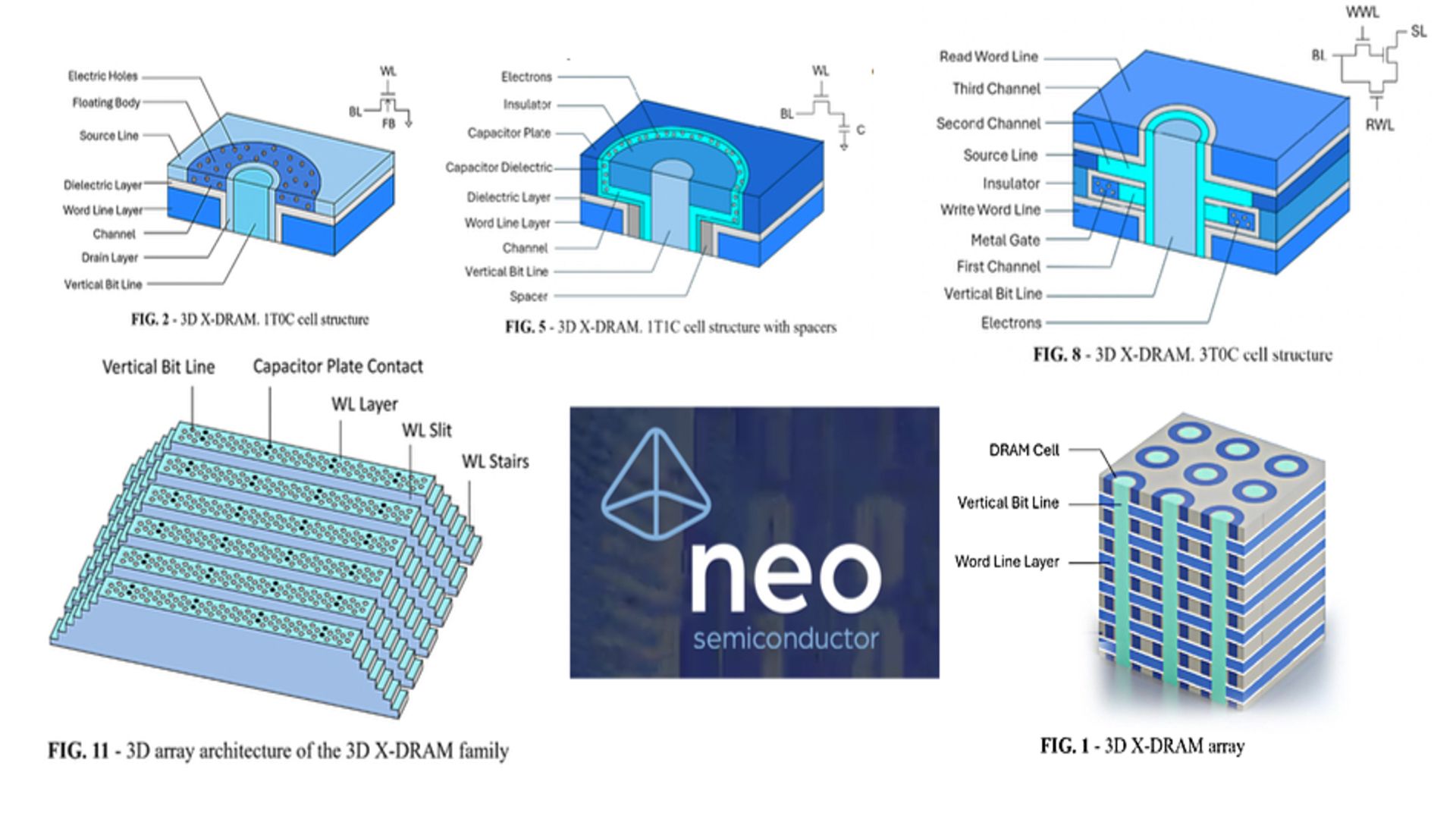
What is 3D X-DRAM and how does it compare to DDR5?
3D X-DRAM is a vertically stacked memory architecture designed to overcome traditional scaling limits, offering higher density and lower power consumption than conventional planar designs like DDR5. It aims for a fundamental architectural shift rather than just faster speeds.
When can PC builders expect to see 3D X-DRAM in gaming rigs?
While NEO Semiconductor has achieved proof-of-concept, market availability for 3D X-DRAM in consumer gaming rigs is still several years away. Industry experts suggest the next 18-24 months will be critical for further development and competitive landscape shaping.
Will 3D X-DRAM significantly impact gaming performance?
Yes, if successful, 3D X-DRAM's higher density and lower latency could profoundly impact gaming, especially for titles leveraging AI, large open worlds, or high-resolution textures. It could enable more complex game environments and faster load times.
Confirmed details first, useful context second. This is the quickest path to the source trail and the next pages worth opening.
Source date: April 24, 2026