If loading a modern AAA title used to feel like waiting for a satellite download, the days of excruciating load screens are nearly over. What if a 90-second wait could shrink to four seconds? This isn't a graphical overhaul; it's a fundamental shift in how PC hardware communicates with games, making performance gains feel less like an upgrade and more like magic.
What this means for players: The introduction of advanced shader delivery technology promises to drastically cut down on the friction points of modern gaming, allowing high-end hardware to spend more time rendering and less time compiling.
The breakthrough technology fueling this revolution is Advanced Shader Delivery (ASD), and its latest test case is the launch of Forza Horizon 6 on Windows 11. This architectural change is changing the performance ceiling for PC gaming, and here is what every enthusiast needs to know about the future of shader compatibility.
RDNA 3 and Shader Delivery Architecture
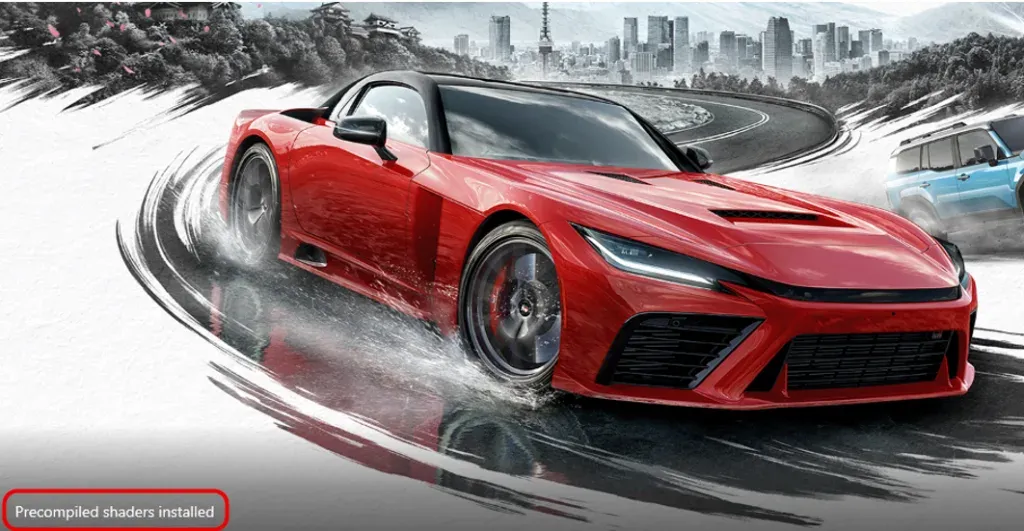
At its core, the issue ASD solves is efficiency. When a game runs, the GPU constantly needs to calculate how light interacts with surfaces—this process is managed by shaders. In older systems, the first time the GPU encountered a specific shader combination (like a unique reflection on wet asphalt), it had to stop the game, compile that shader on the fly, and then restart. This runtime compilation process is what caused those notorious, lengthy load times.
How does shader delivery work? Essentially, ASD shifts the workload from the live game environment to the background. Instead of waiting for the GPU to stumble upon a new shader and halt the frame rate, the system pre-compiles and caches these complex shader calculations ahead of time. This pre-processing dramatically smooths the user experience, turning what was once a crippling bottleneck into a seamless background task.
Microsoft is rapidly expanding this support, extending Advanced Shader Delivery (ASD) beyond handheld devices. The feature now officially supports RDNA 3, RDNA 3.5, and even RDNA 4 GPUs, ensuring that the benefit of faster load times and better stability reaches a massive segment of the current and future PC gaming market.
Forza Horizon 6 Showcases Shader Performance

The practical proof of ASD’s power arrived with testing using Forza Horizon 6. The benchmark results were staggering: on hardware like an RX 7600 GPU paired with a Ryzen 7 5800 CPU, the initial load time plummeted from a nearly unbearable 90 seconds down to a mere 4 seconds. This represents a performance leap that is not merely iterative; it is transformational.
The underlying technical compatibility is key here. While ASD is the gold standard for AMD users, the technology’s impact is a broader conversation about modern GPU architecture. The necessity of *RDNA 3 GPU shader compatibility* highlights the industry’s push toward smarter, more efficient hardware utilization. The technology requires the game to run through the Microsoft Store or the Xbox PC app, confirming its integration into the modern Windows 11 gaming ecosystem.
For the enthusiast builder, this means the focus shifts slightly from raw TFLOPS to architectural efficiency. The ability to dramatically reduce latency and eliminate stuttering due to shader compilation is arguably as valuable as a raw clock speed increase. This optimization validates the trend toward holistic system performance, where software and hardware must work in perfect concert.
Accessing Advanced Shader Delivery

While the performance gains are undeniable, access to this technology is currently restricted. To take advantage of ASD, users must enroll in the Xbox Insiders program and utilize the specific Xbox Insiders Hub app, as Microsoft classifies this feature as a preview technology. This tiered rollout model is typical for major platform overhauls, ensuring stability while gathering real-world data.
It is important to note that while ASD is the primary mechanism for AMD card users, other GPU manufacturers are addressing similar problems with their own optimized features. Nvidia users are advised to leverage ‘Auto Shader Compilation’ within the Nvidia app, and Intel users should utilize ‘Precompiled Shader Distribution’ in the Intel Graphics app. This competitive landscape ensures that the industry maintains a high bar for optimization and user experience.
The primary keyword, Advanced Shader Delivery for Forza Horizon 6, serves as the perfect real-world demonstration of this entire system in action. It proves that this isn't just a theoretical concept; it's a measurable, game-changing reality available today to those who follow the preview programs.
The implications for future hardware are significant. We can anticipate that future GPU generations will be designed with pre-compiled shader pipelines as a core feature, making the current ASD framework a baseline expectation rather than a groundbreaking feature.
Engineers will continue to focus on minimizing the time gap between shader discovery and deployment, pushing the boundaries of GPU memory management. The next major leap will likely involve integrating real-time shader optimization directly into the operating system kernel, minimizing the need for separate companion apps.
Expect to see the adoption of these advanced shader techniques applied to more demanding simulation genres, where complex physics and unique visual effects currently strain older hardware.
Frequently Asked Questions

Is Advanced Shader Delivery only for AMD GPUs?
No, while ASD is the primary mechanism for AMD, Nvidia and Intel users have comparable optimized features available through their respective control panels, such as Auto Shader Compilation.
What is the main difference between ASD and traditional shader compilation?
Traditional compilation occurs live during gameplay, causing stuttering and long load times. ASD pre-compiles these shaders in the background, making the process seamless and invisible to the player.
Do I need a brand new GPU to benefit from ASD?
The technology is compatible with RDNA 3 and later architectures. However, enabling the feature requires utilizing the Xbox Insiders program and the Xbox PC app.
Confirmed details first, useful context second. This is the quickest path to the source trail and the next pages worth opening.
Source date: May 18, 2026