AMD thought they had the mid-range market locked down, but Intel just flipped the script in a way that should make every PC builder pause their checkout cart. The performance gap in professional workloads isn't just a lead; it's a total blowout that redefines what a $200 CPU is actually capable of delivering.
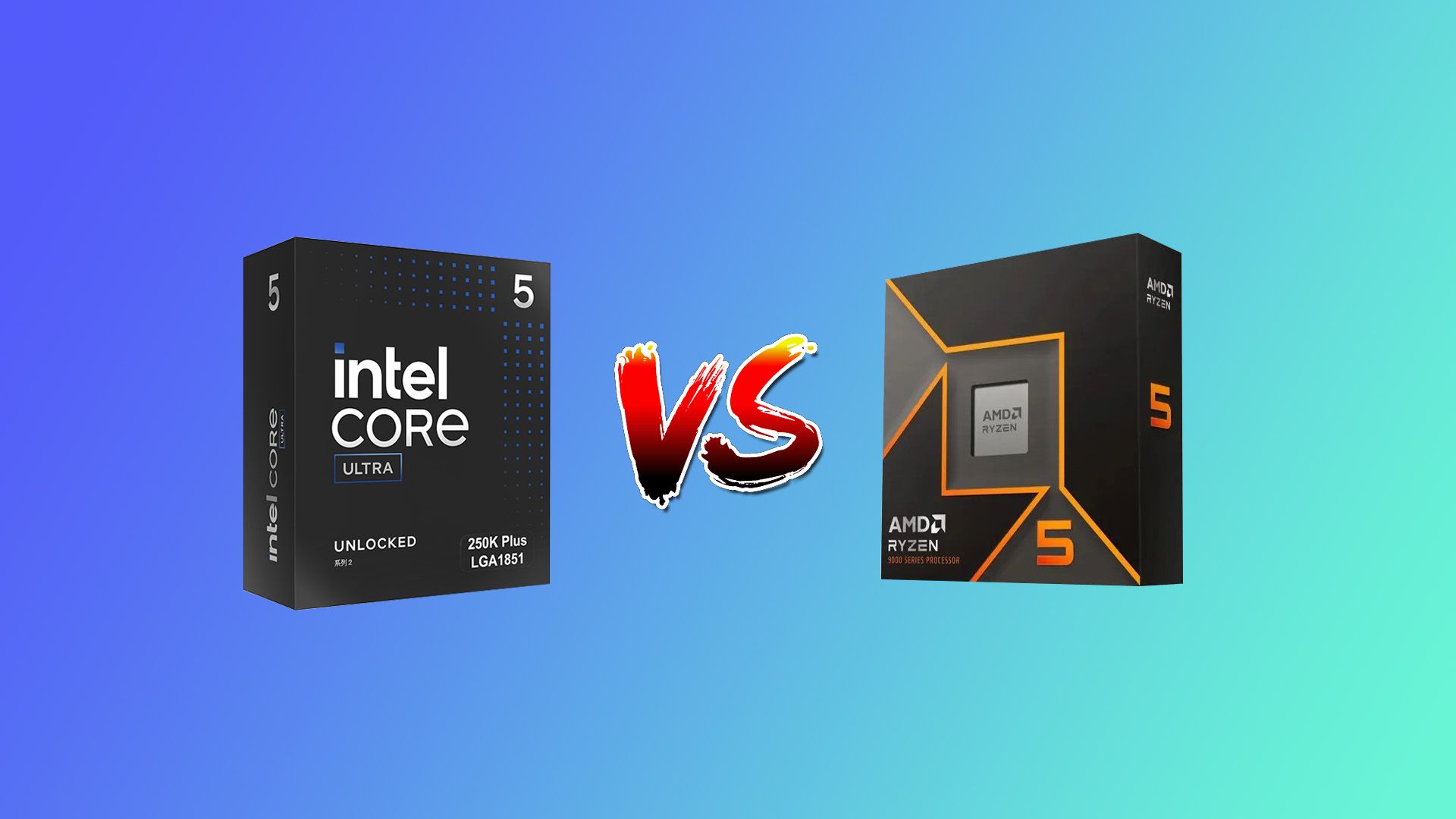
Why this matters: For the first time in several hardware cycles, the "gaming" chip choice is being dictated by thermal efficiency and massive productivity gains rather than just raw frame rates at 1080p. While the frame counters might look similar, the underlying architecture tells a much more aggressive story of Intel’s return to dominance.

Intel Core Ultra 5 250K Plus Dominance
The numbers coming out of the latest productivity benchmarks are, frankly, staggering. In the professional sphere, the Intel Core Ultra 5 250K Plus is currently operating in a different league compared to the AMD Ryzen 5 9600X. We are looking at a massive 79% performance lead in general productivity tasks, with Intel’s silicon racking up 465 points against AMD’s 260. This isn't just a marginal victory; it is a fundamental shift in how we categorize mid-range hardware.
When you look at heavy-duty rendering and computational stress tests, the gap widens into a chasm. In the Cinebench 2026 suite, the Core Ultra 5 250K Plus posted a score of 7,523. To put that into perspective, the Ryzen 5 9600X trailed significantly with a score of 4,043. For users who spend their days editing 4K video, compiling code, or running complex simulations, the Intel chip offers nearly double the throughput for a negligible price increase. This level of multi-threaded efficiency suggests that Intel's new architecture is finally making better use of its high core counts and optimized cache pools.
Ryzen 5 9600X Thermals Face Pressure
For years, the narrative has been that Intel chips run hot and hungry while AMD stays cool. That narrative just died. The Core Ultra 5 250K Plus is proving to be a masterclass in thermal management, maintaining an average operating temperature of just 48°C. In contrast, the Ryzen 5 9600X runs noticeably hotter, averaging 59°C under similar loads. This 11-degree difference is a massive deal for SFF (Small Form Factor) builders who struggle with heat dissipation in cramped cases.
The efficiency story continues when we look at the wall outlet. Despite the higher performance ceiling, the Intel chip consumes less power, drawing an average of 82.3W. The 9600X, while still efficient by historical standards, pulls 86.2W. Intel’s ability to squeeze more TFLOPS out of a lower power envelope points toward a highly refined nanometer process that prioritizes performance-per-watt. It turns out that the larger cache pool on the 250K Plus isn't just for show; it’s actively reducing the energy cost of data movement within the chip.
Intel Core Ultra Gaming Parity
If you are strictly looking at the FPS counter in your favorite shooter, the competition is much tighter. In 1080p gaming benchmarks, the Core Ultra 5 250K Plus holds a razor-thin 1% edge over the Ryzen 5 9600X. For most players, this is a statistical wash. Whether you are raiding in an MMO or flicking heads in a competitive shooter, both CPUs will provide a virtually identical experience at high refresh rates. This makes the "Gaming" branding on these chips a bit of a misnomer, as the real battle is happening everywhere else.
However, the 1% lead shouldn't be dismissed entirely. When you consider that Intel is achieving this parity while running cooler and using less power, the value proposition starts to lean heavily in one direction. The 250K Plus features a more robust architecture that handles background tasks—like Discord, streaming software, or browser tabs—with far more headroom than the AMD equivalent. It’s a smoother overall system experience that benchmarks don’t always capture in a single FPS number.
The Final Intel vs AMD Value
Money is usually the deciding factor in the mid-range bracket, and the pricing here is aggressive. The Intel Core Ultra 5 250K Plus carries an MSRP of $199, while the AMD Ryzen 5 9600X sits at $185. For a $14 difference, the choice seems almost too easy. You are paying less than the price of a takeout lunch to gain a 79% boost in productivity, better thermals, and lower power consumption. In the world of PC hardware, that is an absurdly high return on investment.
AMD has long relied on being the "value" king, but when Intel manages to out-engineer them on efficiency while maintaining a similar price point, the red team has a problem. The 250K Plus is positioned as a "do-it-all" chip that doesn't force you to choose between a workstation and a gaming rig. It simply handles both. For builders looking to future-proof their setups for the next three to five years, the Intel platform currently offers the most stable and high-performing foundation in the sub-$200 category.
Intel's aggressive push into efficiency suggests future high-end releases will likely set new records for performance-per-watt across the entire stack. AMD will almost certainly respond with a price cut for the 9600X to maintain its budget appeal before their next architecture refresh hits the shelves. Expect the mid-range market to shift entirely toward multi-threaded productivity as the primary selling point for enthusiasts in 2025.
Frequently Asked Questions
Is the Intel Core Ultra 5 250K Plus better for gaming than the Ryzen 5 9600X?
They are nearly identical in gaming, with Intel holding a negligible 1% performance lead at 1080p resolutions. The real difference lies in Intel's superior thermal efficiency and productivity speeds.
Does the Core Ultra 5 250K Plus require a high-end liquid cooler?
No, the chip is remarkably efficient, averaging only 48°C during workloads. A standard air cooler or a basic AIO will be more than sufficient to keep temperatures under control.
Is the $14 price difference between the two CPUs worth it?
Yes, the extra $14 provides a 79% increase in productivity performance and better power efficiency. It is currently considered the best value-per-dollar choice for a mid-range build.
Tags : #CoreUltra5 #AMDvsIntel #CPUComparison #GamingHardware #RyzenVsCore
Confirmed details first, useful context second. This is the quickest path to the source trail and the next pages worth opening.
Source date: April 18, 2026