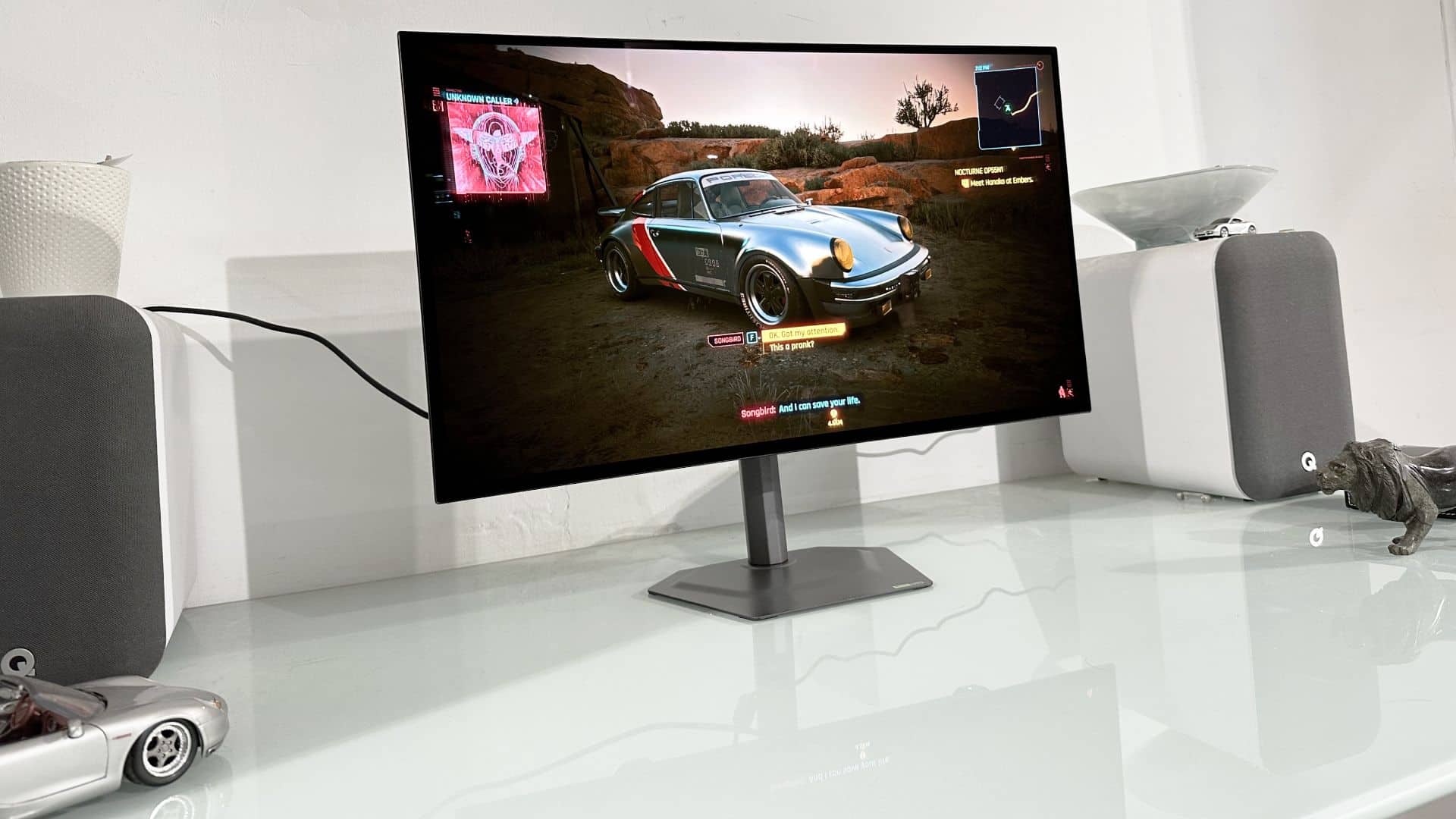
The Core Experience of OLED Gaming
The Gigabyte MO27Q28GR enters the crowded field of premium gaming monitors by packaging LG's latest 4th Gen Primary RGB Tandem OLED panel into a highly usable 27-inch, 1440p form factor. Confirmed by PC Gamer on April 13, 2026, this monitor is designed for gamers seeking cutting-edge OLED performance without the prohibitive cost associated with 4K or higher-resolution panels. Readers should care because the MO27Q28GR successfully balances top-tier panel technology—specifically the brightness and punchiness of the new LG WOLED panel—with a manageable resolution and refresh rate, making it a compelling choice for those who want the best of OLED without overspending on a pixel-dense desktop experience. The monitor boasts a 280 Hz refresh rate and a 1440p resolution, a combination that remains a popular and highly effective sweet spot for modern gaming rigs, especially given the current state of GPU pricing.
At its heart, the MO27Q28GR is a showcase for modern OLED capabilities. The panel delivers impressive specifications, including a 335 nits full-screen brightness and a peak of 1,500 nits in HDR, ensuring that colors pop and blacks are truly inky. The 0.03 ms response time is virtually instantaneous, eliminating motion blur and ghosting that can plague less optimized displays. This performance profile makes it suitable for a wide range of gaming genres, from fast-paced shooters to visually rich RPGs. Furthermore, the inclusion of advanced connectivity options, such as HDMI 2.1, DisplayPort 1.4, and a USB-C port supporting up to 45W dynamic Power Delivery, ensures that it can integrate smoothly into almost any contemporary PC setup.
Where the Gigabyte MO27Q28GR Excels
The MO27Q28GR’s greatest strength lies in its ability to deliver flagship OLED visual fidelity while maintaining a practical, gamer-friendly resolution. Unlike some competitors that push for ultra-high pixel density, the 1440p resolution provides enough detail for immersive gaming without demanding the absolute peak performance of the most expensive graphics cards. This makes the monitor highly accessible to a broader segment of the enthusiast market. The combination of the 280 Hz refresh rate and the OLED panel’s inherent speed creates a viewing experience that is both visually stunning and incredibly fluid. For competitive gamers, the high refresh rate is a clear advantage, though the review notes that it is quick enough for all but the most dedicated esports professionals.
The connectivity suite is another major selling point. The inclusion of a robust USB-A hub alongside the USB-C PD capability elevates the monitor from a mere display to a potential docking station. This versatility is crucial for streamers or content creators who use their monitor for multiple tasks beyond just gaming. The panel itself is a technical marvel, featuring LG's latest WOLED technology. While the branding can be confusing—the review notes the "RGB" designation despite the underlying technology—the performance speaks for itself. It provides a noticeable visual upgrade over cheaper 27-inch OLED alternatives that lack this specific, advanced generation of panel technology.
For those considering the purchase, the value proposition is clear. While cheaper 27-inch OLED models exist, they often compromise on panel generation or features. The MO27Q28GR, priced around $599, represents a premium investment that pays dividends in terms of visual quality and connectivity options. Key features that solidify its position as a top-tier gaming monitor include:
- LG 4th Gen WOLED Panel: Ensures superior color volume and contrast compared to older OLED generations.
- 280 Hz Refresh Rate: Provides silky-smooth motion crucial for fast-paced gaming.
- 1440p Resolution: Optimal balance between visual detail and GPU performance requirements.
- Comprehensive I/O: USB-C PD and multiple display outputs simplify desk setup.
Understanding the 1440p Compromise
While the MO27Q28GR is a powerhouse, prospective buyers must understand the trade-offs inherent in its 1440p resolution. The review explicitly warns that this monitor is not designed for users who prioritize a "crispy, high-DPI experience" for desktop work. If your primary use case involves graphic design, detailed photo editing, or heavy document work where sharp text and vast desktop real estate are paramount, a higher resolution panel might be necessary. This is the most important caveat for potential buyers to consider.
The 1440p resolution is described as a "good compromise for gaming," which accurately frames its purpose. It allows the monitor to run demanding modern titles at high frame rates without overwhelming even moderately powerful graphics cards. However, this compromise means that the monitor does not deliver the pixel-per-inch density that a native 4K panel would offer. This distinction is vital: the MO27Q28GR is optimized for the dynamic, fast-moving content of games, not the static, text-heavy nature of professional productivity work. Potential users should weigh their primary use case—gaming versus desktop productivity—before making a final decision.
Who Should Buy This OLED Monitor?
The Gigabyte MO27Q28GR is tailor-made for a specific demographic: the dedicated, modern gamer who values cutting-edge visual technology and high refresh rates but is also mindful of budget constraints. It is ideal for players who spend significant time in fast-paced, visually rich games and who want the best OLED panel available without jumping to the extreme cost of a 4K OLED display. The monitor’s features make it a perfect centerpiece for a high-performance gaming setup.
Conversely, those who require absolute pixel perfection for professional graphic design or video editing, or those who are solely focused on the sharpest possible text display, might find the 1440p resolution limiting. The monitor is not a general-purpose workstation replacement; it is a specialized gaming tool. The technical specifications, including the LG WOLED panel, the 280 Hz refresh rate, and the robust connectivity, confirm its identity as a dedicated gaming monitor that happens to be visually stunning.
Is 1440p resolution enough for modern gaming?
Yes, 1440p is widely considered the current sweet spot for high-refresh-rate gaming. It offers a significant visual upgrade over 1080p while remaining manageable for most modern graphics cards.
What is the benefit of LG's 4th Gen OLED panel?
The 4th Gen panel provides enhanced brightness and color punch compared to previous OLED generations. This results in a more vibrant and impactful visual experience, especially in HDR content.
Can I use this monitor for professional work?
While it has excellent connectivity, the 1440p resolution is optimized for gaming fluidity, not for the highest DPI required by professional graphic design or detailed text work.
Confirmed details first, useful context second. This is the quickest path to the source trail and the next pages worth opening.
Source date: April 13, 2026