Pulsar's 500g Mouse Is a Technical Nightmare That Could Actually Break Your Wrist
Imagine a gaming mouse so heavy it doubles as a gym weight. Now imagine trying to hit a high-speed flick shot in a competitive shooter while dragging half a kilogram of solid plastic and electronics across your desk. This isn't just a hypothetical scenario; it is the reality of Pulsar’s latest hardware experiment, a device that challenges every established rule of ergonomic design and peripheral physics.
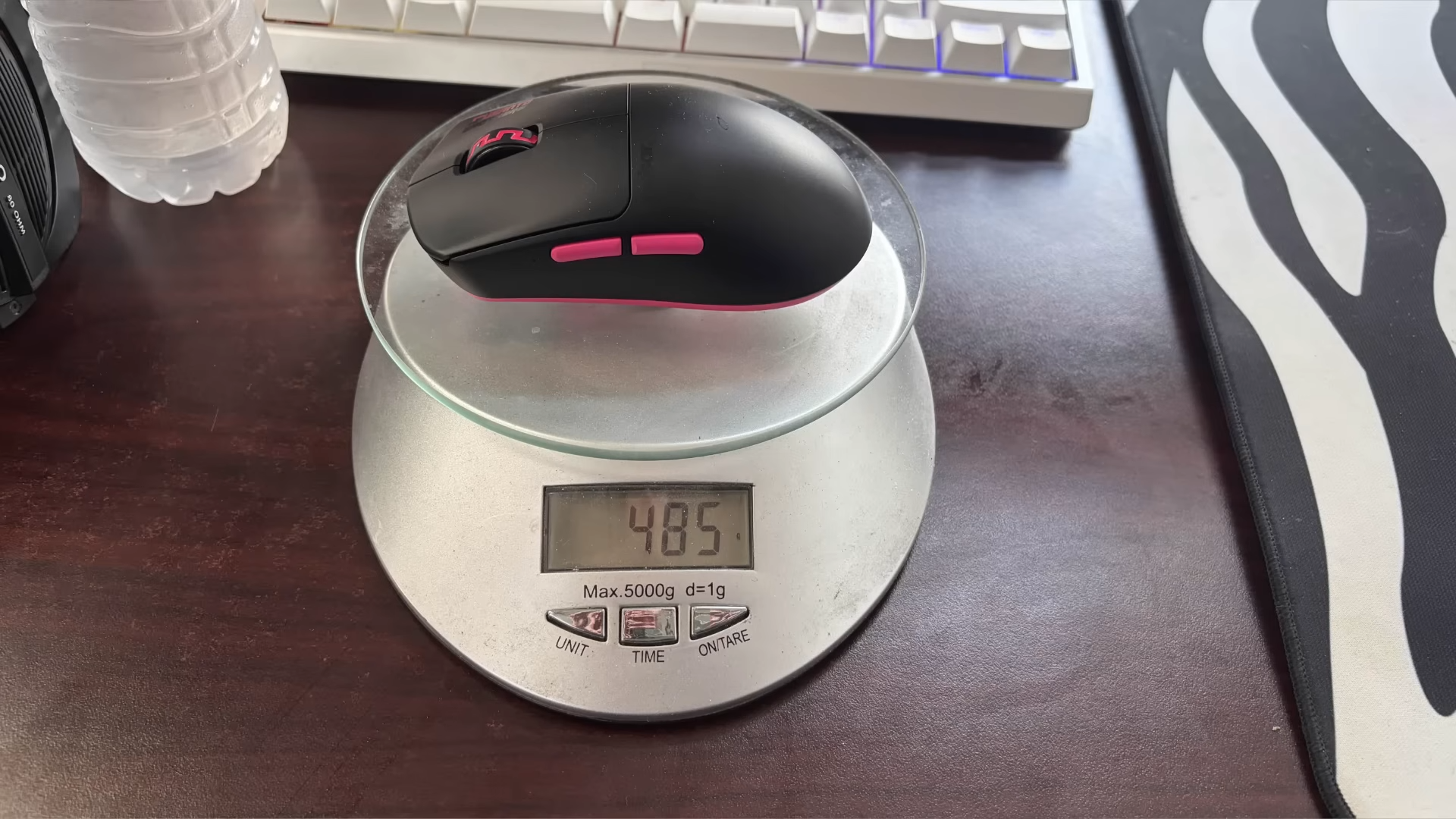
What this means for players: As the industry pushes toward sub-30g ultralight carbon fiber builds, the "CrazyHeavy" project serves as a stark, physical warning about the dangerous limits of peripheral weight and the potential for long-term musculoskeletal injury. While the hardware community obsesses over shaving off single grams to improve reaction times, this release pivots 180 degrees to explore a density that most enthusiasts haven't seen since the era of ball-mice and lead-weighted prototypes.

Pulsar CrazyHeavy Defies Modern Engineering Trends
The current hardware landscape is dominated by a race to the bottom. Brands like Razer, Logitech, and Pulsar itself usually compete to see who can produce the lightest chassis without sacrificing structural integrity. The CrazyHeavy mouse shatters this trajectory. Originally conceived as an April Fool's Day prank, the product actually made it to a hyper-limited production run. Only 20 units were manufactured for public distribution, making it one of the rarest—and most controversial—peripherals in the enthusiast circuit.
Under the hood, the CrazyHeavy is built upon the architecture of the standard Susanto-X mouse. However, the internal density has been artificially inflated to reach its massive target weight. In a market where a 60g mouse is considered "average" and anything over 80g is labeled "heavy," a 500g device is an absolute anomaly. It represents a 733% increase in mass over the industry-leading ultralight competitors. This isn't just a hardware tweak; it is a fundamental shift in the mechanical requirements of mouse movement, requiring significantly more Newtons of force to overcome static friction and inertia.
Boardzy Benchmarks Reveal Fatal Wireless Flaws
When the unit reached the hands of veteran peripheral reviewer Boardzy, the technical reality of the device began to unravel. While marketed at half a kilogram, the specific unit tested weighed in at 485g. This 15g variance might seem negligible on a standard mouse, but in the context of high-performance hardware, it suggests a lack of precision in the internal weighting mechanism. More concerning than the weight, however, was the total failure of the device’s wireless functionality. During technical testing, the wireless mode was found to be non-functional, forcing the user to rely on a wired connection.
The failure of the wireless module highlights the inherent difficulty in balancing extreme weight with sensitive PCB components. Adding massive amounts of internal ballast creates unique challenges for signal interference and battery placement. For a device intended to showcase Pulsar’s engineering range, the inability to maintain a stable wireless polling rate is a significant technical black mark. Enthusiasts who value the Susanto-X's usual performance will find that the CrazyHeavy's density seems to have come at the cost of basic operational reliability.
Physical Strain Limits Extreme Mouse Weight
Beyond the technical specs, the ergonomic implications of the CrazyHeavy are genuinely alarming. Boardzy described the device as a "brute force training method," but the humor ended when discussing physical safety. The reviewer issued a stern warning: using a 500g mouse for high-movement gaming—such as Tracking in Overwatch or clicking in AimLabs—could "seriously wind up hurting your wrist." The human wrist is not designed to accelerate and decelerate half a kilogram of mass thousands of times per hour.
From a biomechanical perspective, the strain placed on the carpal tunnel and the tendons of the forearm is immense. The force required to stop a 485g object mid-flick creates a massive amount of kinetic energy that the small muscles in the hand must absorb. While some users might view it as a novelty "training weight," the risk of developing Repetitive Strain Injury (RSI) or tendonitis is significantly higher with this device than with any other peripheral on the market. It effectively turns a gaming session into a high-intensity resistance workout for the smallest, most vulnerable joints in a gamer's body.
Novelty Hardware Lacks Competitive Gaming Utility
While the Pulsar CrazyHeavy succeeds as a conversation piece, it fails every practical benchmark for competitive gaming. The extreme weight makes micro-adjustments nearly impossible, and the physical fatigue sets in within minutes of use. Even the most dedicated "weight-tuning" fans, who might still cling to their Logitech G502s with all weights installed, will find the CrazyHeavy's 500g mass to be unusable. It sits in a strange limbo between a functional tool and a satirical paperweight.
The reality is that this product was never meant to be a daily driver. Its existence is a commentary on the "weight wars" of the peripheral industry, but by releasing 20 units to the public, Pulsar has allowed a potentially hazardous tool into the wild. The hardware community’s reaction has been a mix of fascination and derision, as the device's functional flaws—specifically the wireless failure—strip away any pretense of it being a serious piece of equipment. It remains a high-density curiosity that serves better as a desk ornament than a competitive input device.
Peripheral manufacturers will likely use this controversy to double down on ultra-lightweight carbon fiber research. The 500g threshold will remain a strictly satirical boundary that no serious competitive brand dares to cross again. Expect future "joke" products to focus on aesthetic gimmicks rather than weight-based engineering that risks user safety.
Frequently Asked Questions
Is the Pulsar CrazyHeavy mouse available for purchase?
No, it was a limited release of only 20 units intended as an April Fool's joke and is no longer in production.
What are the main technical issues with the 500g mouse?
Reviewers found that the wireless mode failed to function and the extreme weight poses a significant risk of wrist injury.
How does the weight compare to standard gaming mice?
At 500g, it is roughly ten times heavier than modern ultralight mice, which typically weigh between 45g and 60g.
Tags :
Confirmed details first, useful context second. This is the quickest path to the source trail and the next pages worth opening.
Source date: April 16, 2026