The aesthetic of the unfinished is a peculiar currency in the modern gaming landscape. For decades, players have navigated the radioactive marshes of the Chornobyl Exclusion Zone, tolerating system crashes and erratic AI as if they were part of the atmosphere itself. This intersection of high-concept ambition and technical instability eventually birthed a derogatory shorthand: "Eurojank." It is a term that suggests brilliance is a byproduct of regional limitation, a backhanded compliment that has long irritated the architects of the East. Andrii Verpakhovskyi, a core designer behind the original S.T.A.L.K.E.R. trilogy, has finally decided to fire back. Speaking with Edge magazine, Verpakhovskyi dismantled the linguistic scaffolding of the term, arguing that the label is not only unfair but fundamentally ignores the reality of creative struggle.
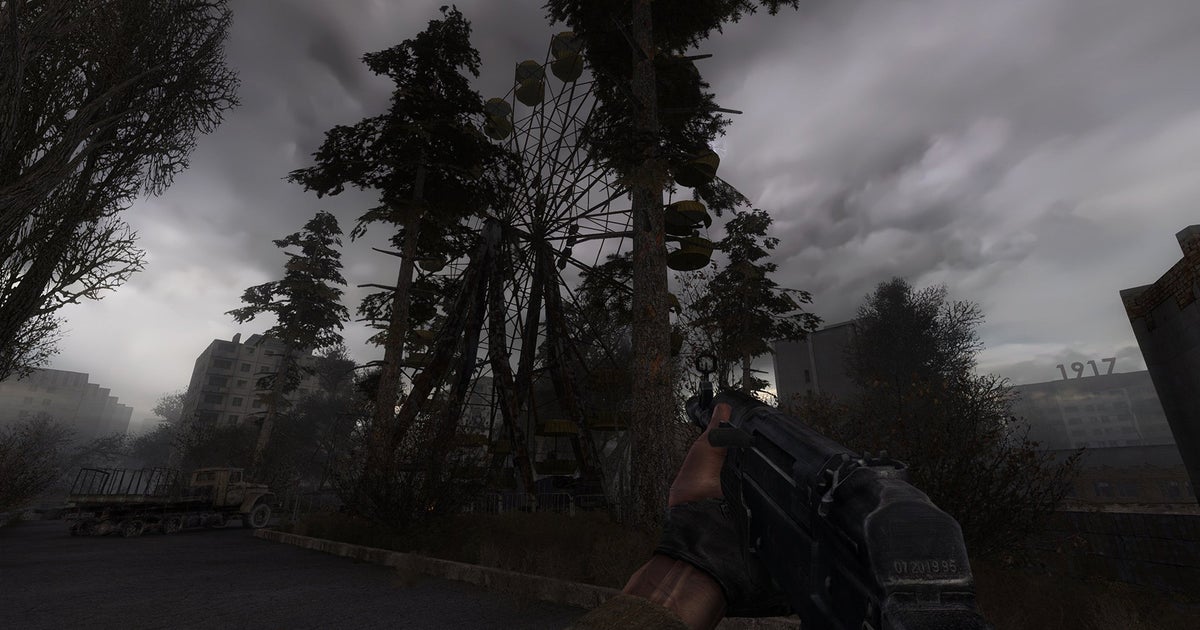
Andrii Verpakhovskyi Rejects The Eurojank Classification
The core of the argument rests on the reductive nature of geographic branding. To Verpakhovskyi, the "Eurojank" tag creates a false silo where European developers are expected to produce flawed masterpieces while their Western counterparts are held to a different standard of "polish." It is a double standard that ignores the universal nature of technical debt. When a game from a massive North American studio launches with broken physics, it is a scandal; when a game from Kyiv or Prague does the same, it is categorized as a charming regional quirk. Verpakhovskyi finds this distinction patronizing. It suggests that the ambition of the Stalker series was somehow accidental, or that the team was incapable of achieving the stability of a Triple-A title due to their location.
The designer’s frustration is palpable. He views the term as a barrier to entry for developers who are trying to compete on a global stage without the safety net of established Western infrastructure. By labeling these games as "Eurojank," the industry creates a psychological ceiling. It implies that these studios will never reach the "clean" execution of a Naughty Dog or a Rockstar, regardless of their innovation. Verpakhovskyi argues that the flaws in the original Stalker were not a result of "European-ness," but rather the result of a team attempting to build a living, breathing ecosystem—the A-Life system—that was years ahead of the hardware available at the time. It was a failure of optimization, not a cultural trait.
Troika Games Proves Ambition Transcends Regional Borders
To dismantle the geographic specificity of the term, Verpakhovskyi points toward the Pacific. He specifically cites his admiration for Troika Games, the defunct California-based studio responsible for cult classics like Vampire: The Masquerade – Bloodlines and Arcanum: Of Steamworks and Magick Obscura. These titles are legendary for the exact same reasons Stalker is: they offered unparalleled player agency, deep atmospheric storytelling, and were notoriously, almost hilariously, broken at launch. Bloodlines was a technical disaster that required years of community-made patches to function properly. Yet, no one ever called it "Amerijank."
The comparison is vital to Verpakhovskyi’s thesis. If a studio in Irvine, California, can produce a game that is "janky" but brilliant, then the "Euro" prefix is revealed as a hollow stereotype. The designer suggests that the gaming public has been conditioned to see European ambition as a reach exceeding its grasp, while American ambition is seen as a noble pursuit that occasionally stumbles. By highlighting Troika Games, Verpakhovskyi is forcing a re-evaluation of how we talk about complexity. High-risk systems like the branching narratives of Arcanum or the immersive sim elements of Bloodlines are inherently prone to bugs. This is a tax on innovation, not a tax on a specific continent’s development capabilities.
Stalker Development Relied On Raw Creative Newcomers
The history of GSC Game World is a story of grit over pedigree. Verpakhovskyi emphasizes that the original Stalker team was largely composed of newcomers to the industry. These were not veterans who had spent decades at Ubisoft or Electronic Arts; many had no formal training in game design or software engineering. They were learning to build the plane while it was already in the air, flying through a storm of shifting requirements and engine overhauls. This lack of formalization led to the very idiosyncrasies that critics now label as "jank." It was raw, unrefined energy channeled into a project that was perhaps too large for its own good.
This "newcomer" status is often overlooked in favor of the "Eurojank" narrative. When a team of novices builds a genre-defining immersive sim that remains relevant twenty years later, it should be viewed as a monumental achievement of individual effort and creativity. Instead, the label suggests a collective, regional incompetence. Verpakhovskyi wants the industry to recognize that the rough edges of Stalker were the scars of a battle fought by people who didn't know what was "impossible." They ignored the standard industry pipelines because they didn't know they existed. This resulted in a game that felt like nothing else on the market—a jagged, terrifying, and deeply human experience that a more "polished" team might have sanded down into something unrecognizable.
Edge Magazine Interview Highlights Unfair Geographic Labels
The interview with Edge magazine has sparked a wider conversation about the power of language in game criticism. Labels are shortcuts for the brain, but they often become cages for the creators. Verpakhovskyi’s stance is a call for a more nuanced vocabulary that evaluates a game based on its systemic complexity rather than its country of origin. If a game is "janky," it is "janky" because of its scope, its budget, or its engine—not because of the longitude and latitude of the office where the code was written. The designer’s pushback is a defense of the individual developer’s agency against a tide of reductive marketing speak.
Ultimately, the "Eurojank" debate is about respect. It is about acknowledging that the friction in games like Stalker is often the price of admission for experiences that the risk-averse Triple-A machine refuses to touch. As the industry moves toward a more globalized development model, these regional slurs become increasingly obsolete. Verpakhovskyi’s intervention serves as a reminder that behind every "janky" system is a developer who took a risk that others wouldn't. The Zone doesn't care about your formal training, and as Verpakhovskyi suggests, neither should the critics.
The industry will likely see a phased retirement of regional descriptors as Eastern European studios continue to dominate the technical benchmarks of the mid-2020s. We should expect a new critical framework to emerge that prioritizes "systemic density" over "polish," effectively validating the design philosophy Verpakhovskyi defended. By the end of the decade, the term "Eurojank" will be viewed as a relic of a less sophisticated era of games journalism.
Tags : #StalkerGames #GamingDesign #EurojankDebunked #VideoGameNews #IndependentGames
Confirmed details first, useful context second. This is the quickest path to the source trail and the next pages worth opening.