Microsoft’s Newest Security Patch Is Breaking The Servers Behind Your Games
Imagine sitting down for a high-stakes competitive match or a massive raid only to find the entire backend of your favorite game has vanished. A critical Windows Server patch intended to shore up security is doing the exact opposite, sending the enterprise systems that power our digital worlds into a tailspin. This isn't just a minor glitch; it is a fundamental breakdown of the infrastructure that keeps game studios running and online services authenticated.
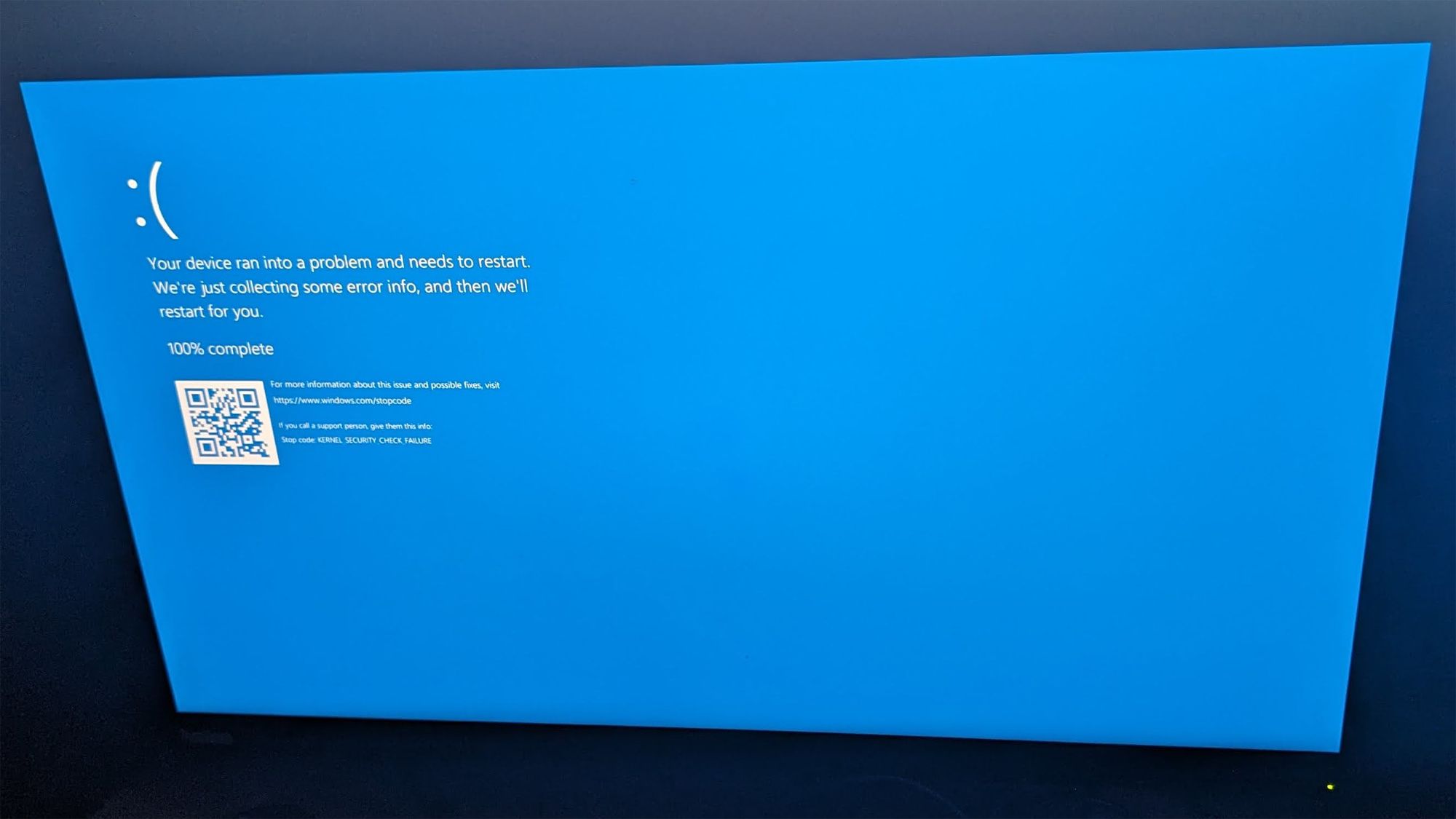
Why this matters: When the servers managing user identities and security permissions fail, the entire online gaming ecosystem—from development pipelines to multiplayer login portals—is at risk of a total blackout.

Microsoft Update Triggers Windows Server Chaos
The tech giant has officially confirmed that its latest attempt to secure the enterprise landscape has backfired. The problematic update, identified as KB5082063, was released in April 2026 with the goal of patching critical vulnerabilities. Instead of a smoother, safer experience, IT departments across the globe are reporting that their Windows Server environments are crumbling under the weight of the new code. The most visible symptom of this failure is a catastrophic reboot cycle that leaves domain controllers unable to stay online for more than a few minutes at a time.
For the uninitiated, domain controllers are the gatekeepers of a network. They verify who you are and what you have permission to access. When these servers enter a continuous reboot loop, the entire network effectively loses its brain. In the context of a major game studio, this means developers cannot access their workstations, internal build servers stop functioning, and the version control systems housing the next big AAA title become unreachable. It is a high-stakes technical failure that hit at the worst possible time for teams pushing toward summer release windows.
Active Directory Crashes Halt Game Development
The technical rot at the heart of KB5082063 specifically targets the Local Security Authority Subsystem Service, better known as LSASS. This is the core component responsible for managing security policy on a system. According to the evidence, the April 2026 patch triggers immediate crashes within LSASS, particularly on servers that are not configured as Global Catalog domain controllers. When LSASS fails, the server has no choice but to restart, creating a loop that is nearly impossible to break without manual intervention from an exhausted IT team.
This vulnerability leaves Active Directory authentication and directory services completely unavailable. For gamers, this is the hidden layer of the internet that makes "Sign in with Xbox Live" or "Connect to EA Servers" possible. If the underlying Active Directory environment is down, the game client cannot verify your digital footprint. We are seeing a scenario where the very tools meant to protect user data are instead locking the doors and throwing away the key. The stability of these services is the backbone of the modern "always-online" gaming era, and that backbone is currently fractured.
Privileged Access Management Faces Total Instability
The scope of this disaster extends into the most secure corners of the industry. The resulting instability is particularly problematic for environments utilizing Privileged Access Management (PAM) deployments. PAM is the gold standard for security in game development, ensuring that only authorized leads can touch sensitive game code or player databases. With KB5082063 causing services to fail, these high-security lanes are effectively blocked. The failure of these critical services necessitates immediate attention from IT infrastructure teams who are now forced to choose between security and uptime.
In a world where data breaches and source code leaks are a constant threat, game studios rely on PAM to keep their intellectual property safe. If these systems are unstable, the risk of a security lapse increases exponentially. IT teams are currently working through the night to roll back the April 2026 update, but the damage to the production schedule for several unannounced projects could be significant. It is a stark reminder that even the most routine security maintenance can have unintended consequences that ripple through the entire entertainment sector.
Windows Server Patch Disrupts Enterprise Systems
The immediate reaction from the community has been one of frustration and urgency. Infrastructure leads are reporting that the only way to restore sanity to their server racks is a full removal of the KB5082063 update. However, removing a security patch leaves the system vulnerable to the very exploits the patch was designed to fix. This "catch-22" puts tech leads in an impossible position: keep the servers running and risk a hack, or keep the servers patched and watch them reboot into oblivion. For the gaming industry, where downtime equates to millions in lost revenue, the choice is usually to prioritize uptime at any cost.
As we move further into April 2026, the pressure is on Microsoft to deliver a "fix for the fix." The complexity of Active Directory means that a simple hotfix might not be enough to resolve the LSASS memory leaks and crash triggers. Until a stable solution is provided, the enterprise side of gaming will remain on high alert. This event serves as a wake-up call for the industry to diversify its infrastructure and move away from a "single point of failure" model that can be brought down by a single faulty update package.
Infrastructure teams will likely spend the remainder of April 2026 rolling back these updates to restore service stability. Microsoft is expected to fast-track a secondary "out-of-band" patch to address the LSASS memory leaks and reboot cycles. Future deployment cycles will probably see longer testing periods for non-Global Catalog domain controllers to prevent another widespread authentication blackout.
Frequently Asked Questions
Will this Windows Server issue affect my local PC gaming performance?
No, this issue is strictly limited to enterprise Windows Server environments and does not impact Windows 10 or Windows 11 home users. However, it could cause login issues for online games if the studio's backend servers are affected.
What should IT admins do if their servers are stuck in a reboot loop?
The current recommendation is to boot into Safe Mode and uninstall the KB5082063 update to restore LSASS stability. Teams should then monitor Microsoft's official channels for an out-of-band fix expected later this month.
Could this server outage lead to game release delays?
While unlikely to cause long-term delays, the disruption to internal development tools and Privileged Access Management can halt daily progress. If a studio cannot access its build pipeline for several days, minor internal milestones may be pushed back.
Tags :
Confirmed details first, useful context second. This is the quickest path to the source trail and the next pages worth opening.
Source date: April 17, 2026