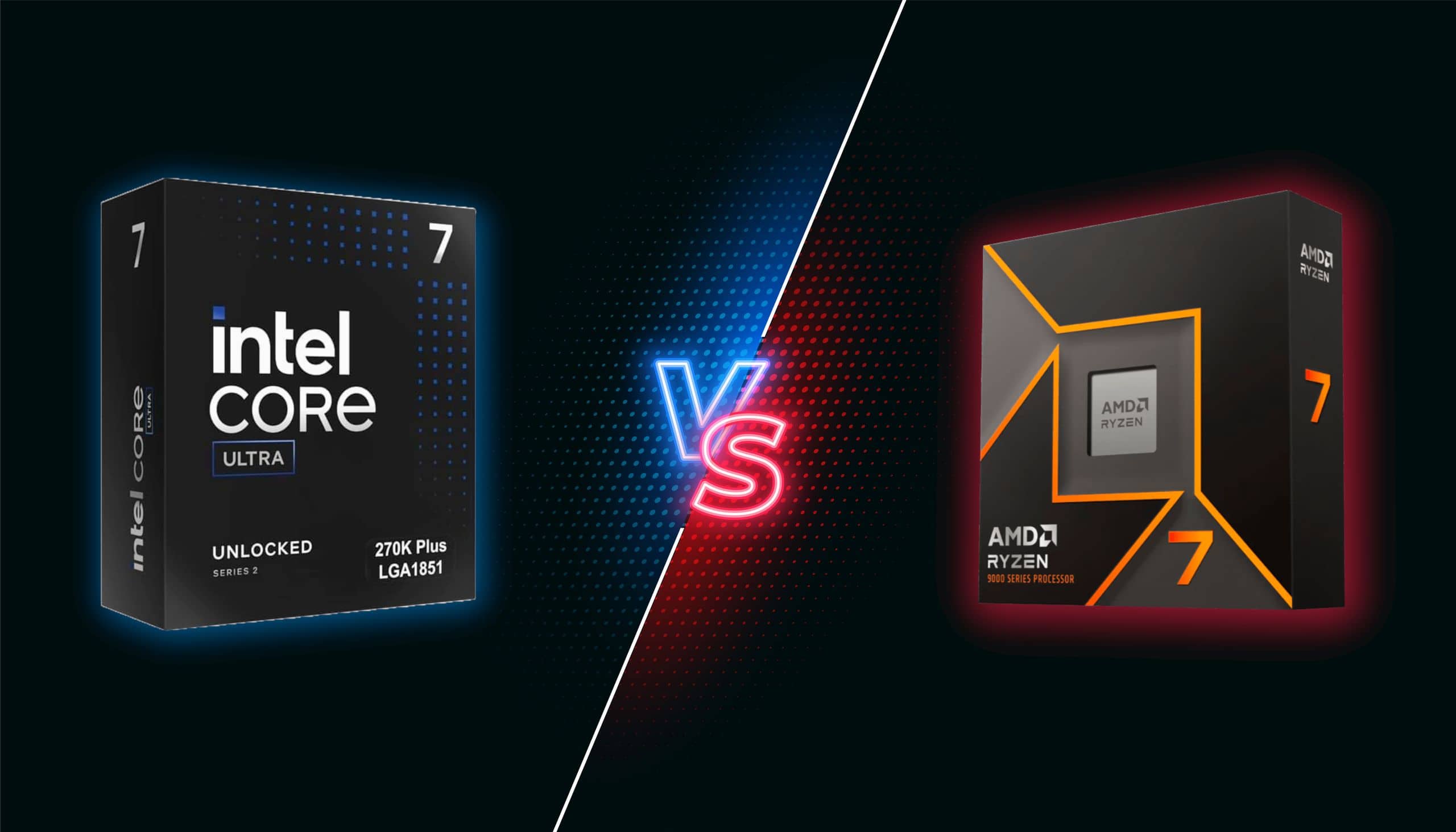
The New Midrange CPU Contenders
The competitive landscape for high-end desktop CPUs just got a major shakeup. Intel has launched the Core Ultra 7 270K Plus, positioning it at a remarkable $300 price point—a substantial $100 drop from the Core Ultra 7 265K. This aggressive pricing, coupled with reported increases in both gaming and productivity performance, marks a critical effort by Intel to regain market ground following the initial reception of the Arrow Lake platform. Its direct competitor in this crucial price bracket is AMD’s Ryzen 7 9700. For potential builders spending between $300 and $350, this faceoff represents a pivotal purchase decision, pitting Intel’s refreshed architecture against AMD’s latest Zen 5 offerings.
The context of this battle is significant. Intel’s initial Arrow Lake launch struggled to keep pace with its predecessor, Raptor Lake Refresh, especially when compared to the continued dominance of AMD’s X3D CPUs in pure gaming benchmarks. The 270K Plus is presented as Intel's answer to this challenge, suggesting that the platform has matured and improved since its debut. While the Ryzen 7 9700X is a powerful chip, the 270K Plus’s combination of performance gains and drastic cost reduction makes it a formidable contender that demands serious attention from system builders.
Core Architecture and Specifications
When examining the raw specifications, both chips present compelling, yet different, architectures. The Core Ultra 7 270K Plus utilizes an Arrow Lake Refresh design, featuring a robust 24 cores across 24 threads (8 P-Cores and 16 E-Cores). Its clock speeds are impressive, boasting a P-Core boost clock of 5.4 GHz and an E-Core boost clock of 4.7 GHz, all while maintaining a 125W TDP. This design emphasizes a high core count and strong multi-threaded performance, which is excellent for heavy productivity workloads like video rendering or complex compiling.
AMD’s Ryzen 7 9700X, on the other hand, is built on the Zen 5 architecture, featuring 8 cores and 16 threads. While the core count is lower than the 270K Plus, its efficiency and clock speeds are highly competitive. The 9700X operates with a lower base TDP of 65W, but can boost up to 142W, offering flexibility for cooling and power management. The differences in core count and power delivery mean that the optimal choice depends heavily on the user's primary workload—whether it is maximizing core count for professional use or optimizing power efficiency for gaming.
Key Architectural Differences
The core differences can be summarized by looking at the primary strengths of each chip:
- Intel Core Ultra 7 270K Plus: Higher core count (24 cores), excellent multi-threaded performance, and high boost clocks.
- AMD Ryzen 7 9700X: Strong power efficiency (65W base TDP), proven Zen 5 architecture, and optimized gaming performance.
Gaming and Productivity Benchmarks
In real-world testing, the performance gap between these two CPUs narrows considerably, especially when considering the price-to-performance ratio. For gaming, while AMD’s X3D chips continue to set the gold standard, the 270K Plus shows marked improvements over its original Arrow Lake iteration, making it a much more viable gaming option than previously thought. The 9700X remains a highly capable gaming chip, benefiting from Zen 5 optimizations that ensure smooth frame delivery across modern titles.
However, the productivity side often favors the sheer core count of the 270K Plus. Tasks that benefit from massive parallel processing—such as running virtual machines or encoding large video files—tend to see the Intel chip pull ahead. Conversely, in scenarios where power draw and thermal management are critical, the 9700X’s more conservative base power draw gives it an edge, allowing for potentially quieter and more stable builds without requiring massive cooling solutions.
Making the $300-$350 Purchase Decision
Ultimately, the choice between the Core Ultra 7 270K Plus and the Ryzen 7 9700X comes down to the user's primary use case and tolerance for power consumption. The 270K Plus is a powerful value proposition for the builder who needs maximum core count and raw multi-threaded power for a mix of gaming and heavy professional work. The $100 price drop compared to its predecessor makes it an immediate budget standout.
If the build is primarily focused on pure gaming performance and efficiency, and the user wants to avoid the complexity of managing high power draw, the Ryzen 7 9700X is an excellent, reliable choice. If, however, the user is a content creator, programmer, or streamer who needs the highest possible core count for demanding background tasks, the 270K Plus offers a compelling blend of performance and affordability. Both chips represent a significant step up in the midrange, making the $300-$350 segment highly competitive and beneficial for consumers.
Which CPU is better for pure gaming?
While AMD's X3D chips still lead, the Core Ultra 7 270K Plus shows significant gains and is highly competitive. For maximum efficiency and stability, the Ryzen 7 9700X is a strong alternative.
Is the 270K Plus worth the price drop?
Yes. The $100 reduction from the 265K, combined with reported performance increases, makes the 270K Plus an extremely attractive value proposition for high-core-count builds.
What is the main difference in architecture?
The 270K Plus uses an Arrow Lake Refresh design with a high core count (24 cores), while the 9700X uses the Zen 5 architecture, prioritizing power efficiency and gaming optimization.
Confirmed details first, useful context second. This is the quickest path to the source trail and the next pages worth opening.
Source date: April 11, 2026