The New Baseline for External Graphics Cards
A new test conducted by PCWorld, reported by Tom's Hardware on April 13, 2026, confirms a massive breakthrough in external graphics processing: the specialized CopprLink standard can enable an eGPU setup to achieve performance essentially matching an RTX 5090 connected directly to a motherboard. This development is highly significant because it addresses the single greatest technical hurdle facing external GPUs—the bandwidth bottleneck—and fundamentally changes the perceived ceiling for portable high-end gaming. For years, the industry has struggled with the inherent limitations of external connections, making true native performance an almost mythical goal. The context for this breakthrough is the realization that previous standards, while improving, were severely constrained by their physical data transfer rates, creating a performance gap that was considered insurmountable for consumer-grade devices.
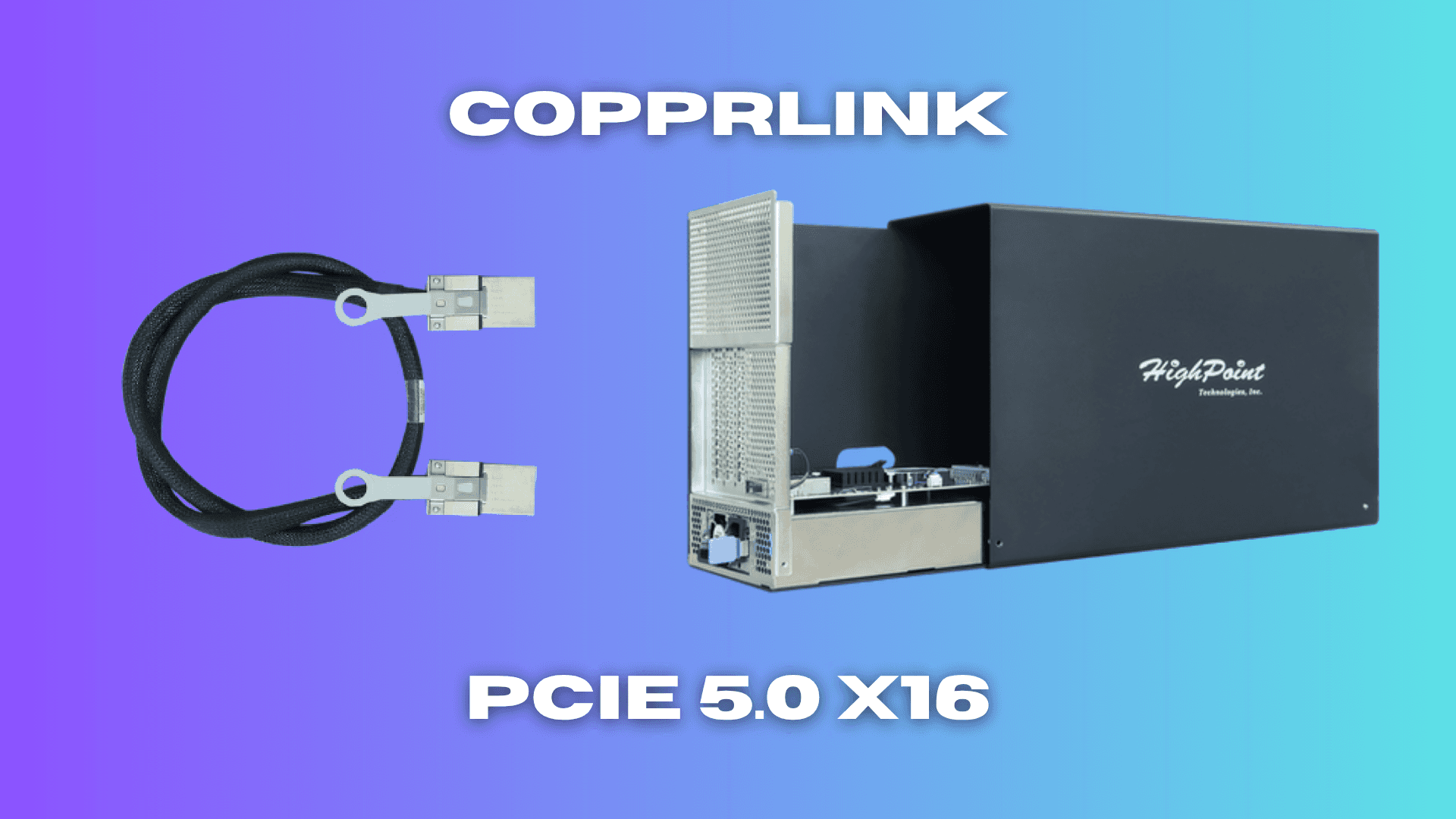
The core of this achievement lies in the physical connection standard itself. Traditional external GPU solutions rely on protocols like Thunderbolt or OCuLink, which, while convenient, have historically limited the available PCIe lanes and their maximum data transfer rate. The dossier confirms that CopprLink is a standard developed by the PCI-SIG, giving it a level of industry backing and technical capability that previous standards lacked. Crucially, CopprLink is engineered to facilitate a full-fat PCIe 5.0 x16 connection. This means the connection can carry 32 GT/s per lane, resulting in a staggering 64 GB/s of total bandwidth. To put this into perspective, the source notes that previous standards, such as OCuLink utilizing a PCIe 4.0 x8 configuration, have historically peaked at a mere 16 GB/s. This nearly fourfold increase in available bandwidth is not a minor upgrade; it is the difference between a bottlenecked connection and a near-perfect digital pipeline, allowing the high-end GPU to communicate its massive processing power to the system without being starved of data.
Where the Trade-Off Appears in Implementation
While the performance metrics are revolutionary, the analysis reveals that the trade-off for achieving this near-native performance is complexity, cost, and specialized hardware. This is not a simple, plug-and-play consumer product; it is a highly engineered, server-grade solution. The setup tested utilized HighPoint's RocketStor 8631D eGPU enclosure, which carries a substantial initial cost of $1,300. This enclosure is explicitly described as a chassis meant for rack-scale deployments and AI workloads, not optimized for the typical gaming rig. This distinction is critical for potential consumers to understand.
The technical requirements dictate a specific, high-power infrastructure. The enclosure comes equipped with a massive 1,300W power supply and specialized 16-pin cables necessary to power current-generation graphics cards. This level of power delivery and physical robustness moves the eGPU setup out of the realm of typical consumer peripherals and into the domain of professional workstations or small data centers. The sheer size and industrial nature of the chassis, while providing ample airflow and accepting virtually any model, means that portability, which is the primary selling point of eGPUs, is sacrificed for raw, uncompromised bandwidth. The trade-off is clear: maximum performance requires maximum industrial commitment.
Understanding the components involved highlights the gap between consumer expectation and current technical reality. The system requires multiple specialized parts to function optimally:
- The Enclosure: A robust, server-grade chassis (e.g., HighPoint RocketStor 8631D) providing necessary cooling and power infrastructure.
- The Connection: The specialized CopprLink standard enabling the full PCIe 5.0 x16 link.
- The Power: A high-wattage PSU (1,300W) capable of sustaining flagship GPU loads.
Therefore, while the performance gains are undeniable, the current implementation suggests that CopprLink is, for now, a niche, high-end solution for professional users or enthusiasts who prioritize raw bandwidth over consumer convenience. The $2,300+ total setup cost confirms that this is not an entry-level or even mid-range upgrade.
Why Players Should Watch the Market Shift
The primary takeaway for gamers and tech enthusiasts is that the CopprLink test does not just validate a new standard; it establishes a new, impossibly high performance benchmark for the entire external GPU market. This breakthrough creates immediate pressure on every competing eGPU standard—Thunderbolt, OCuLink, and others—to rapidly close the performance gap. If the industry wants to maintain relevance in the portable computing space, they must address the bandwidth limitation that CopprLink has so thoroughly exposed.
The market consequence is that the next generation of eGPU standards must aim for a full-fat PCIe 5.0 x16 connection, or at least a highly optimized, proprietary solution that approaches those 64 GB/s transfer rates. Until then, current eGPU solutions, even those using the latest Thunderbolt iterations, will appear increasingly outdated and bottlenecked when compared to this new CopprLink benchmark. This forces manufacturers to rethink their entire product roadmap, potentially leading to more robust, higher-powered, and more expensive enclosures in the near future.
For the player, this means that the future of high-end portable gaming is no longer defined by the GPU's raw TFLOPS count, but by the quality and bandwidth of the connection linking the GPU to the host machine. While the current setup is overkill for most home users, the existence of this benchmark signals a clear trajectory: eGPUs are moving from being "good enough" peripherals to being genuinely viable, high-performance computing tools. The unresolved signal remains the commercialization of this technology; if the industry can successfully miniaturize the server-grade components and reduce the cost while maintaining the 64 GB/s bandwidth, the eGPU market could undergo a seismic shift.
Is CopprLink available for consumers?
Currently, the reported setup uses server-grade components and is not marketed as a consumer product. The technology is establishing a new benchmark rather than being sold as a standard peripheral.
How does PCIe 5.0 x16 compare to Thunderbolt 4?
PCIe 5.0 x16 offers a massive 64 GB/s of dedicated bandwidth, whereas Thunderbolt 4, while versatile, is limited by its protocol tunneling and bandwidth ceiling, making it significantly slower for pure GPU data transfer.
Will this breakthrough lower the cost of eGPUs?
The initial implementation is extremely expensive due to the required server-grade chassis and power supply. For costs to drop, manufacturers must successfully miniaturize the robust components while maintaining the high bandwidth.
Confirmed details first, useful context second. This is the quickest path to the source trail and the next pages worth opening.
Source date: April 13, 2026