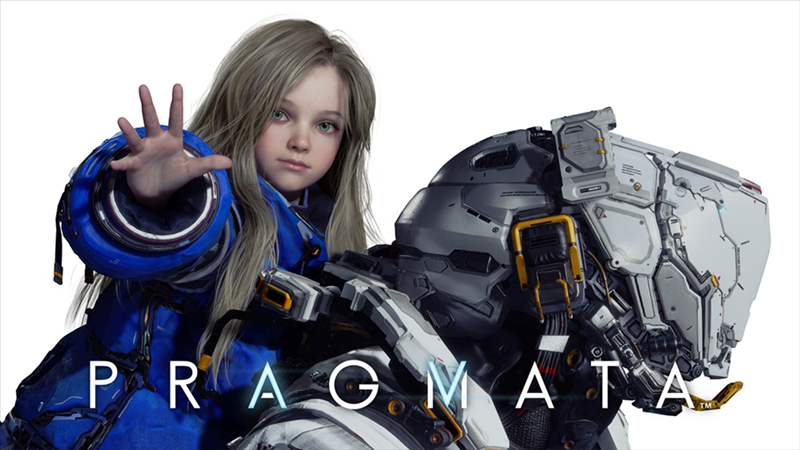
Editorial update — November 11, 2026: This April 1, 2026 story covered a real Capcom April Fools' joke, but its original wording exaggerated measurable fan reaction, suggested a crossover outfit without evidence and described the game as unreleased. This archive now distinguishes the joke from the verified launch of Capcom's original game. Its original URL and publication date are preserved.
Did Capcom announce that PRAGMATA is a Mega Man game?
No. On April 1, 2026, Capcom's official PRAGMATA social account posted a short gag responding to the fan theory that its upcoming sci-fi game was secretly connected to Mega Man. The post explicitly said “April Fools!” rather than presenting a genuine announcement. It was part of the publisher's PRAGMATA Moon Bytes social series.
The source is Capcom's original PRAGMATA post. The same message was documented at the time in Gematsu's roundup of April Fools' jokes and Push Square's April 1 coverage.
The fact that an official account mentioned Mega Man does not turn the joke into a teaser for an unannounced sequel, downloadable character outfit or crossover collaboration.
Why did fans think PRAGMATA was related to Mega Man?
The theory grew from surface similarities: a young android called Diana, a blue outfit, robots and a futuristic setting. Those details encouraged players to compare Capcom's new game with its older action series.
Visual similarities can be entertaining to discuss, but they are not evidence of shared continuity. The Mega Man games have their own characters, world and design history. In contrast, PRAGMATA's public story revolves around Hugh Williams and Diana trying to survive a lunar research environment and reach Earth.
Capcom's joke acknowledged a popular theory, while its official product documentation consistently described PRAGMATA as a new intellectual property.
Was a Mega Man costume or crossover actually confirmed?
Not in the announcement discussed here. Comments under the April Fools' post and media coverage included playful requests for a Mega Man-inspired outfit. Those requests should not be presented as evidence of a large-scale fan campaign, a confirmed downloadable cosmetic or a promise from Capcom.
The previous version of this article characterized an outfit request as an established trend without a reliable count. The updated report does not repeat that assertion. An individual player's suggestion is not a product announcement.
To verify any future costume or crossover, look for official game patch notes, storefront listings or a publisher announcement naming the content and the platform on which it can be obtained.
What is PRAGMATA really about?
Capcom describes PRAGMATA as a science-fiction action-adventure game set in a near-future lunar environment. The main characters are spacesuit-clad Hugh Williams and the android girl Diana. The core loop blends combat with puzzle mechanics, with both characters contributing to encounters.
The studio emphasized that a younger development team created the original world and gameplay concept. It positioned the game as a new franchise rather than an installment in an established Capcom series. This context is independently documented in Capcom's April 20 investor news release.
That official description is substantially stronger evidence than comparisons drawn from Diana's clothing or the appearance of robotic enemies.
When did the game actually launch?
The original article appeared on April 1, before release. PRAGMATA subsequently launched on April 17, 2026 for PlayStation 5, Xbox Series X|S and PC. Capcom's release statement notes that the Nintendo Switch 2 edition launched on April 24 in Japan and other parts of Asia.
The game is therefore no longer merely an upcoming project as of this November update. Readers searching for a release date should see the confirmed historical launches, not old speculative countdowns.
The game was available for preview in demo form before launch; Capcom explicitly cited its early playable demo as part of the marketing campaign for a new franchise.
How did PRAGMATA perform after release?
On April 20, Capcom announced more than one million units sold in two days after the main April 17 launch. A subsequent May 7 release put sales above two million units in 16 days. These are publisher-reported global sales milestones, not a count of players discussing Mega Man or a measure of how successful the April Fools' post was.
See Capcom's April 20 statement and its May 7 sales update.
The game later received awards in the Japan Game Awards 2026; Capcom's September statement described it as a new original property and reported more than 2.5 million units. None of these materials converts the April joke into an announced crossover.
Does PRAGMATA contain any confirmed Mega Man connection?
The March and April materials considered here do not confirm one. Capcom's corporate description identifies the game as an all-new IP. A fictional android and a blue design are insufficient evidence of a canonical link.
That does not mean a future Easter egg could never exist. It means articles should not assert one without showing exactly what players found or citing an official announcement. The April Fools' joke itself was clearly labeled as such by the developer.
What should readers remember from the story?
Capcom successfully used a fan theory as the subject of a lighthearted April 1 social post. The genuinely important information is that PRAGMATA is a separately developed original action-puzzle adventure, and that its launch dates and early sales have since been confirmed by Capcom.
A corrected archival report is more useful than recycling a joke as if it were a pending product reveal. Dates, platforms and publisher statements remain accessible, while fan wishes are labeled as wishes.
Sources
- PRAGMATA official April 1, 2026 social post.
- Gematsu, contemporary April Fools' compilation.
- Capcom corporate product and sales announcement, April 20, 2026.
- Capcom May 7, 2026 sales statement.
- Capcom September 16, 2026 award and sales announcement.
Image: Official PRAGMATA key art from Capcom's April 20 press release. Earlier syndicated inline images were removed because the corrected article should not reuse them without clear provenance.