If your favorite parts of Tomb Raider and Uncharted are climbing somewhere impossible, surviving an ambush and caring about the people caught in the adventure, simply buying another large open-world game can miss the point. A good follow-up needs momentum, stakes and play that changes between quieter discoveries and danger.
Three games stand out for different reasons in 2026. God of War Ragnarök is the strongest blend of combat and character work; Horizon Forbidden West offers the freedom of exploration and inventive tools; and A Plague Tale: Requiem is the emotional, stealth-heavy choice. None is a literal Uncharted replacement. That's why choosing by your favorite part of those games matters more than copying their review scores.
Quick verdict: choose your favorite ingredient
| Your priority | Recommended game | Main difference |
|---|---|---|
| Strong combat and an emotional journey | God of War Ragnarök | Mythology, RPG-like equipment choices and intense battles |
| Climbing, environments and systems to experiment with | Horizon Forbidden West | A vast open world and tactical machine encounters |
| Vulnerability, stealth and a close-knit story | A Plague Tale: Requiem | Less combat freedom, more narrative tension |
All three offer single-player adventures. Check the relevant platform store for the exact edition and installation requirements; availability and subscription catalogs can change.
1. God of War Ragnarök — for story and combat in equal measure

Kratos and Atreus travel through the Nine Realms trying to understand the threat of Ragnarök while dealing with the consequences of their earlier choices. If Uncharted's banter and character relationships kept you invested between action sequences, the father-and-son relationship here offers a richer and more conflicted version of that motivation.
The central attraction is combat. You switch between different weapon styles, defend, parry and react to enemy behaviors. It has more frequent fighting and more ability development than Tomb Raider, so it may not suit someone who enjoyed Lara's platforming but disliked drawn-out battles. Even so, exploring a realm after a major story beat provides the same sense of seeing a spectacular place open up.
The game launched on PlayStation in 2022 and subsequently arrived on PC. The publisher's official God of War Ragnarök page outlines the story, combat, platforms and edition information. If you have not played God of War (2018), start there: Ragnarök draws heavily on relationships and revelations from the previous game.
Choose it when: you want a cinematic journey that also rewards improving your combat skills. Skip it when: stealth or complex platforming is your main reason to play.
2. Horizon Forbidden West — for exploration and problem-solving

Horizon Forbidden West places Aloy in a post-apocalyptic landscape full of wild environments, communities and dangerous machines. Where Uncharted guides you from one carefully staged set piece to the next, Horizon often lets you choose a distant landmark, then figure out how to approach it.
Combat is more analytical. Scanning a machine, identifying a vulnerable part and selecting the appropriate ammunition can matter more than reflexes alone. You can also use traps, stealth and movement to prepare an encounter, giving players who enjoyed Tomb Raider's tool-and-bow approach something familiar to build on.
The biggest drawback is pacing. Side quests, crafting materials and an enormous map can interrupt the main narrative if you pursue every collectible. Players seeking a tightly scripted ten-hour adventure may find that distracting. The official PlayStation overview explains its world and the difference between editions. Its Complete Edition includes the Burning Shores expansion on supported platforms.
Choose it when: you enjoyed investigating ruins and becoming more capable through new equipment. Skip it when: you prefer a linear, relentlessly paced story.
3. A Plague Tale: Requiem — for survival, stealth and consequences
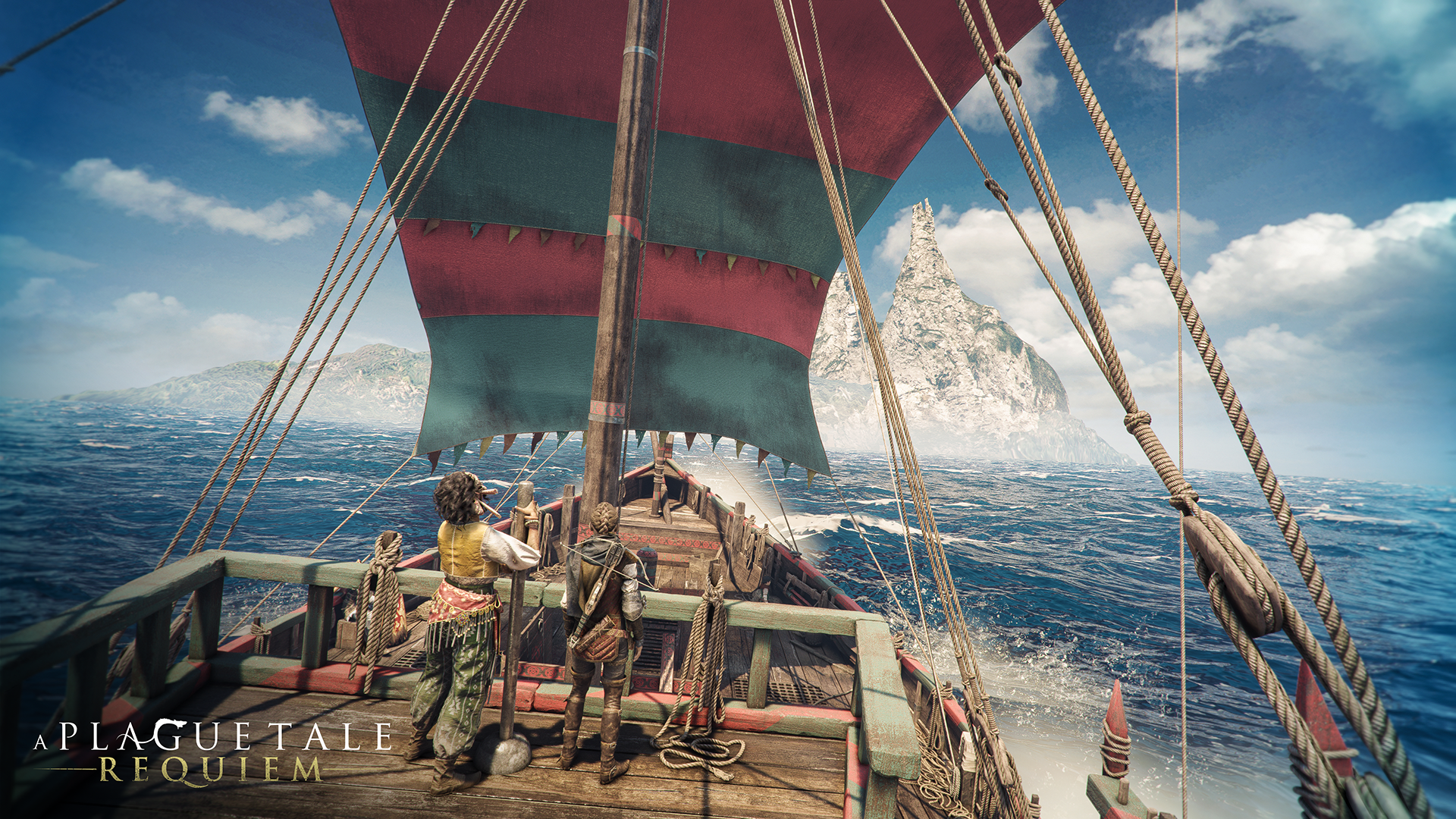
A Plague Tale: Requiem follows Amicia and Hugo through an increasingly desperate journey in medieval France. It values vulnerability in a way the other two games rarely do. Even with improved tools, Amicia cannot solve every threat by winning a fair fight. Moving unseen, manipulating enemy positions and protecting Hugo are central to the experience.
Players who liked Lara Croft's dangerous escapes and the way the story in A Plague Tale: Innocence kept characters under pressure are a natural audience. Requiem is also the sequel to Innocence: playing that first improves the impact of crucial relationships. The emotional tone is considerably darker than the playful spectacle of Uncharted, and some sequences are intense.
Focus Entertainment's official Requiem page details the sibling journey, stealth and combat systems. If you want three dozen hours of open-world chores, look elsewhere; this is a more deliberate narrative built around its characters.
Choose it when: a memorable story, tense escapes and meaningful character decisions matter most. Skip it when: you want a power fantasy with constant direct combat.
Which should you play first?
Start with the question what did you love in Tomb Raider and Uncharted? If it was character drama mixed with enjoyable combat, pick God of War Ragnarök (ideally after the 2018 game). If you want spectacular environments and multiple approaches to the same challenge, choose Horizon Forbidden West (ideally after Zero Dawn). If you want to feel that every escape matters, play A Plague Tale: Innocence followed by Requiem.
These recommendations are not promises of identical gameplay. God of War prioritizes close combat, Horizon puts systems and exploration first, and Requiem favors suspense and fragile relationships. That's exactly why the three make useful alternatives instead of interchangeable entries in a ranking.
Sources: PlayStation — God of War Ragnarök; PlayStation — Horizon Forbidden West; Focus Entertainment — A Plague Tale: Requiem.
Source date: November 9, 2022