You have one free evening or a quiet weekend and want a game that actually reaches its conclusion. That doesn't automatically mean a shorter game is a lesser one. Sometimes a focused adventure can deliver a more memorable journey than an open world filled with dozens of objectives.
Three especially rewarding choices are Firewatch for dialogue and suspense, What Remains of Edith Finch for inventive interactive storytelling, and Journey for atmosphere and discovery. They are intentionally different: one is a wilderness mystery, one is a collection of intimate family stories, and one is a word-light pilgrimage. They can be enjoyed without knowing complex lore, collecting hundreds of items or planning a season-long playthrough.
Quick picks for a single weekend
| If you prefer... | Start with | Important caveat |
|---|---|---|
| Character dialogue and a tense mystery | Firewatch | More walking and conversation than action |
| Inventive stories told through interaction | What Remains of Edith Finch | Themes of death and loss |
| Visual beauty and minimal dialogue | Journey | Its online companion can be unexpected |
Finish times vary according to exploration, reading speed and puzzle-solving. The point is manageable scope, not a strict time guarantee.
1. Firewatch — a wilderness mystery you can sink into
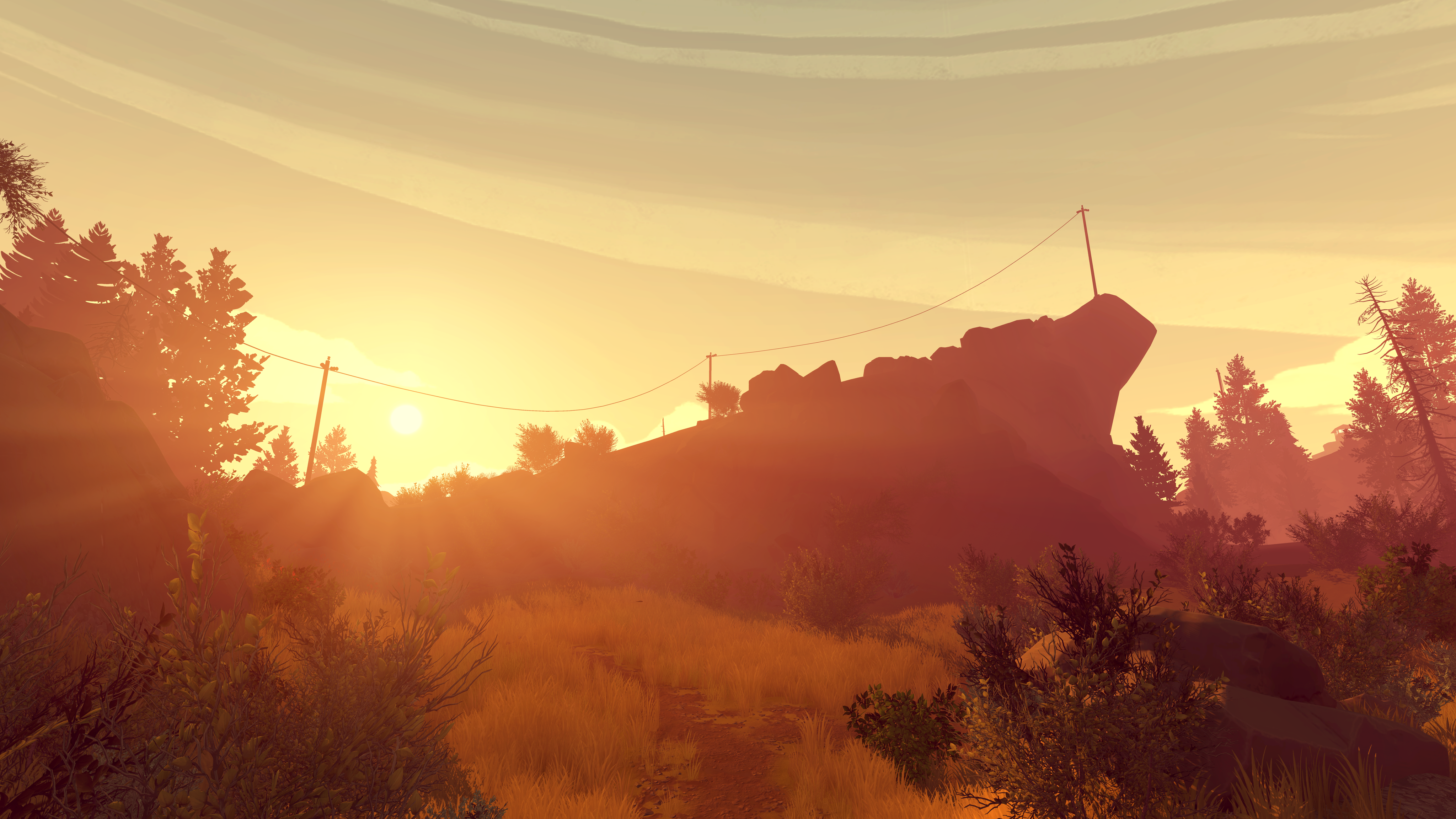
Firewatch begins in the Wyoming wilderness. Henry accepts a summer fire-lookout position, hoping for distance from an already complicated personal life. His main human connection comes through a radio and the voice of Delilah, his supervisor. The conversations do more than deliver objectives: they gradually shape how you understand both characters.
Walking through the forest, spotting landmarks and interpreting unusual discoveries creates tension without building an action-game combat system around it. The environment is inviting but never completely comfortable, especially when your understanding of events starts to change. Its bright sunsets and large vistas are part of the attraction, not evidence that the entire game is carefree.
Campo Santo's official press materials provide authentic screenshots, while the studio's FAQ explains the first-person story, dialogue and character premise. Firewatch isn't a game where every response transforms the entire narrative into a branching RPG. Think of its choices as shaping relationships and tone rather than purchasing dozens of different endings.
Its biggest downside is the limited mechanical variety: if you need constant battles or elaborate crafting, you may find the pacing too gentle. There is also mature personal material in the story, so this isn't the default family recommendation.
Play it when: you want a compelling mystery and characters who feel like people rather than quest markers.
2. What Remains of Edith Finch — a house full of unforgettable stories

What Remains of Edith Finch asks you to explore an extraordinary family home and uncover how its inhabitants lived and died. Each discovered story changes the kind of interaction you're performing. A familiar first-person viewpoint can suddenly become a very different playable memory, which is why this game works especially well when you know little about its scenes beforehand.
The game rarely relies on mechanical difficulty to hold your attention. Instead, it makes everyday details and unusual spaces matter: a bedroom, a remembered event or a seemingly ordinary possession becomes a clue about the people who once lived there. Its variety comes from storytelling rather than acquiring a more powerful weapon or navigating a skill tree.
The official Annapurna page confirms Giant Sparrow as the developer and describes the interconnected family tales, including their subject matter. That last point is crucial. Although the game looks beautiful, its themes can be upsetting, especially for someone seeking pure comfort or a carefree comedy.
Because the strongest moments depend on surprise, avoid detailed walkthroughs, ending explanations and plot-heavy videos before playing. This is an excellent choice for a solo player who wants a complete work with a clear sense of purpose.
Play it when: you value originality, atmosphere and reflection more than conventional action or replayable loot.
3. Journey — the most elegant adventure for a quiet night

Journey reduces the traditional adventure formula to a handful of expressive ideas. You travel across vast desert landscapes, follow ruins toward a distant mountain and learn to glide through increasingly memorable spaces. Movement and music do much of the storytelling; there are no lengthy exposition dumps or complicated dialogue trees to memorize.
The important surprise is how companionship works. Journey can connect you with another traveler online, letting two strangers communicate through movement and a simple musical call. That presence can be moving precisely because you don't receive the usual names, chat messages and quest markers. You can also experience the adventure alone.
Annapurna's official Journey page confirms the premise and availability of its PC edition. The publisher's PC launch trailer offers a trustworthy view of the visual style without describing every moment of the trip.
Players who want frequent boss fights, gear rewards or branching conversations may see Journey as too abstract. It also rewards taking time to watch the scenery and notice how music responds to movement. If that sounds appealing, few games communicate quite as much with so little dialogue.
Play it when: you want a moving experience built around atmosphere rather than mechanics or hundreds of objectives.
What should you check before buying?
First, decide how much intensity you want. Firewatch has suspense and adult character drama; Edith Finch has frank themes of mortality; Journey is more abstract and contemplative. None of them should be sold as a guaranteed feel-good escape.
Second, confirm your platform and storefront. Editions, regional availability and PC requirements can change, and a title listed on one console isn't necessarily on every device. Official product pages are preferable to price-comparison claims that may no longer be accurate.
Finally, consider spoilers. These games were designed to reveal much of their appeal through discovery. An overlong story recap or ending explanation can remove the best reason to experience them firsthand.
Final verdict
Choose Firewatch if your priority is dialogue and a mystery; What Remains of Edith Finch if you want a remarkable, compact interactive anthology; or Journey if you want a beautiful adventure with almost no words. All three show that a game doesn't need a hundred hours to leave an impression.
Primary source: Campo Santo — Firewatch press site. Additional official sources: Annapurna — What Remains of Edith Finch and Annapurna — Journey.
Source date: February 9, 2016