
Dimon Predicts AI Specialists Will Replace Bankers at JPMorgan

Is the corner office about to become obsolete? If the banking industry is anything like the gaming industry, the biggest shifts happen when the technology outpaces human expectation. JPMorgan CEO Jamie Dimon has dropped a bombshell prediction: the future of finance won't require traditional bankers, but rather AI specialists. What does this mean for the global white-collar workforce?
Why this matters: This shift signals a fundamental reckoning for established financial institutions, forcing millions of workers to consider their roles in an AI-dominated economy.
Key Takeaways:
- Dimon anticipates JPMorgan will hire significantly more AI specialists than traditional bankers.
- The transition will be managed gradually through attrition and retraining, avoiding mass layoffs.
- The commentary echoes broader industry concerns about AI’s capability to handle complex knowledge work.
The comments from Jamie Dimon have sent ripples across financial markets. According to his recent remarks, the bank plans to favor AI expertise, predicting a clear shift away from the traditional banking workforce. Dimon stated that JPMorgan is moving toward a structure that prioritizes AI talent, suggesting a future where the ratio of AI specialists to career bankers changes dramatically. This is not merely a technological upgrade; it is a structural overhaul of how financial services are delivered.
The implications are profound. The increasing sophistication of AI tools means they are no longer confined to simple automation tasks. These systems are now capable of complex knowledge work—from writing code and handling intricate legal documents to managing complex financial modeling. This capability directly challenges the core value proposition of many white-collar roles.
Jamie Dimon AI Hiring Predictions Explained

The core of the discussion revolves around the accelerating capability of artificial intelligence. Dimon's prediction that JPMorgan will be "hiring more AI people and fewer bankers in certain categories" isn't just corporate buzz; it reflects a deep analysis of operational efficiency. The bank is positioning itself to maximize the advantages of generative AI, allowing its workforce to pivot from routine management and transactional tasks to oversight, ethical governance, and advanced strategy development.
This isn't a rejection of human talent entirely. Dimon acknowledges that AI will create new, highly valuable roles. However, the implication is clear: the skills of the next generation of finance professionals must be rooted in machine learning, data science, and prompt engineering, rather than decades of institutional banking experience alone.
The magnitude of this shift is unprecedented. Historically, technology has simply augmented human labor. This time, the technology is predicted to redefine the labor structure itself. The discussion forces us to confront the reality of AI automating banking jobs and the accelerating impact on white-collar industries across the globe.
Industry Leaders Tackle Workforce Changes
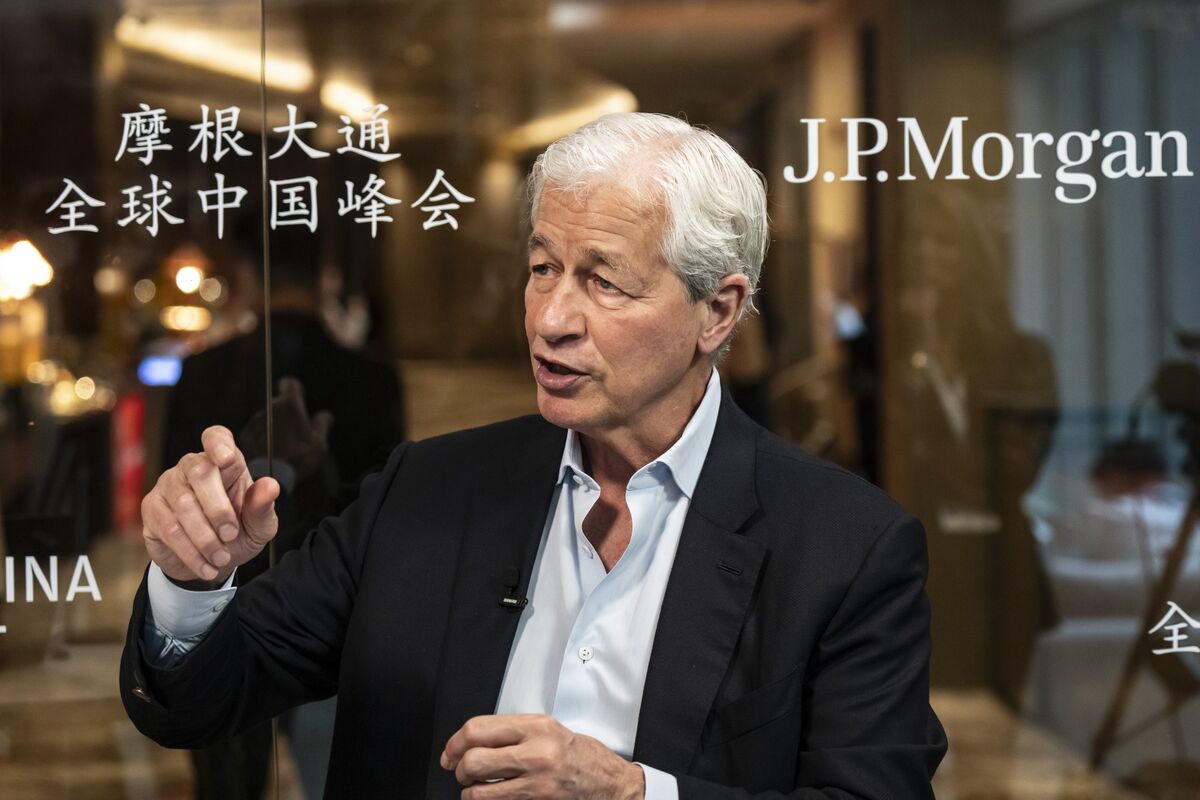
Dimon’s remarks did not come in a vacuum. They align with a broader, more controversial trend among financial industry leaders who are openly discussing AI's role in workforce management. This movement was recently highlighted by Standard Chartered CEO Bill Winters, who previously suggested replacing the bank's "lower-value human capital" with AI.
Winters’ aggressive comments generated significant public backlash, forcing him to issue a memo claiming the quote was "out of context." While this incident sparked controversy, Dimon’s defense of the underlying concept—calling the comments "an artful way to say something"—served to validate the underlying fear and excitement: the rapid displacement of human roles by intelligent systems. The market is reacting not just to the tools, but to the inevitability of the shift.
This conversation underscores a critical point: the industry recognizes that the pace of change demands radical restructuring. The focus is shifting from *if* AI will change banking to *how quickly* institutions can successfully integrate it without causing systemic labor disruption.
Managing the Transition at JPMorgan
Despite the stark predictions of workforce reduction, Dimon adopted a measured tone regarding the actual transition. He emphasized that while AI will certainly create new roles, the bank’s strategy favors a gradual evolution over immediate, massive layoffs. This approach is key to maintaining stability and minimizing the reputational damage associated with rapid corporate downsizing.
JPMorgan plans to manage this transition through natural attrition—the regular rate at which employees leave the company—combined with robust internal retraining programs and early retirement options. Dimon estimated the annual attrition rate at roughly ten percent, equating to around 30,000 departures per year. This figure provides a tangible roadmap, suggesting that the workforce reduction will be a process, not an event.
What this means for the global labor market is the immediate need for reskilling. Professionals must proactively identify the intersection points between their existing expertise and the emerging capabilities of AI. The future of finance requires specialists who can bridge the gap between complex human judgment and algorithmic power. This is the new frontier of human capital.
The conversation surrounding AI impact on white collar industries is now inescapable. It demands that educational systems, corporate HR departments, and individual employees all recalibrate their definitions of "value" in the modern economy. The ability to manage the human element during this technological reckoning will be the most valuable skill of all.
The source of this information comes from Jamie Dimon's public statements regarding the bank's strategic direction, solidifying the narrative that the industry is preparing for a massive, AI-driven workforce change.
Frequently Asked Questions
What skills will be most valuable in AI-driven banking?
Skills that require complex human judgment, ethical reasoning, and creative problem-solving—areas AI cannot easily replicate—will be most valuable. These include strategic oversight, ethical AI governance, and cross-disciplinary communication.
Are mass layoffs imminent at JPMorgan?
According to Dimon, the bank prefers a gradual transition, citing natural attrition and retraining programs rather than immediate, large-scale layoffs. The shift is framed as an evolution, not a sudden cut.
How quickly will AI replace traditional banking roles?
The transition is predicted to be a multi-year process, managed by attrition and corporate retraining. The speed depends heavily on how quickly financial institutions can implement and validate AI tools for complex knowledge work.
The industry is clearly facing a major pivot point, making continuous learning a professional necessity. Financial institutions must view AI specialists not as replacements, but as the new core engine of value creation.
We can anticipate that the next wave of industry reports will focus heavily on the ethical and regulatory frameworks required to govern these powerful AI systems. Furthermore, smaller, agile FinTech companies will likely gain significant ground, leveraging AI to challenge the established, slower processes of legacy banks. Finally, the demand for specialized AI talent will continue to outpace the current supply, driving up salaries and forcing rapid educational reform across the sector.
Confirmed details first, useful context second. This is the quickest path to the source trail and the next pages worth opening.
Source date: May 22, 2026